Introducing the Dumb Houdini Store

Last year I stumbled on a shirt with this stupid Houdini graphic on it.

Screen+Shot+2017-05-16+at+12.33.59+AM.png

That quote makes no sense. Brain and mind are synonymous in that context. It would be like saying, “I get the best ideas from my thoughts.”

As it turns out, that’s not an actual Houdini quote. Someone just half-remembered something Houdini once said and thought, “Eh, I guess I’ll make a shirt out of that.” You can read more about all this on my original post.

Now, look, I don’t know if Houdini was actually dumb or not. I think to do the things he did you maybe have to be a little dumb (or at least a little crazy). And I do think the last phase of his career—the “I'm going to test spiritualists to see if I can find one who can get me in touch with my mommy” period—perhaps doesn’t suggest the sharpest mind in the world. I don’t see much difference between this statement: “Is this woman actually producing an ectoplasmic hand from her vagina? We shall never know unless we conduct the proper testing!” and this one, “I can’t know if leprechauns exists until I’ve consulted all the peer reviewed research.”

And as I said in the original post, I think calling yourself Houdini because your hero was Houdin is kind of a dumb thing to do.

But whether he was actually dumb or not, I think it’s fun to imagine him as being an idiot. All the old pictures take on a different perspective when you imagine him being a total moron who didn’t intentionally get himself in these situations.

ladder tie wm 2.jpg
Screen Shot 2018-11-25 at 3.39.40 PM.png

I literally can’t look at pictures of him now without imagining him as a little goofball dum-dum. I see it in his face. I see it in the faces of the people around him.

Screen Shot 2018-11-25 at 3.23.25 PM.png

In my previous post, I joked about a line of t-shirts with fake stupid quotes by Houdini on them.

Well, now they actually exist and just in time for Christmas. The perfect gift for everyone on your list. The Dumb Houdini Collection at the new Dumb Houdini Store.

Yes, this is real. The purpose behind this is two-fold. The first is because I think it’s funny. The second purpose is because I have some projects I’m working on that I care about and I’m trying to figure out if I’m going to use a print-on-demand type of service like this or if I’m going to do what I’ve done with the GLOMM shirts, i.e., use a traditional screen printer, have the shirts shipped to me, and then do the actual shipping out to you myself (or via someone who is helping me out). That’s obviously a more involved process and it means having to try and keep sizes in stock and all that which is a minor pain in the ass.

So the Dumb Houdini Collection is a test of this type of service to see how it works for my needs. If you order a shirt (or sticker) and you have any issues with the service or the quality of the goods, send me an email and let me know. (You don’t need to let me know if all went well. If I don’t hear from you, I’ll just assume that.)

The Dumb Houdini line comes in three different styles, depending on how willing you are to have something stupid on your shirt.

There is the simple Dumb Houdini logo shirt (black).

Screen Shot 2018-11-25 at 3.10.32 PM.png

There is the Dumb Houdini Brainmind shirt (white or light blue)

Screen Shot 2018-11-25 at 3.11.49 PM.png

And the Dumb Houdini Chains shirt (white or stone grey)

Screen Shot 2018-11-25 at 3.12.32 PM.png

To be clear, this is a real thing, and I will be happy to see anyone in a Dumb Houdini shirt in the future. But this is not like a “call to action” type of thing. If you’re not inclined to buy it, don’t feel like, “Oh, I should buy one anyway because I like his site and I should help him out.” Don’t you worry about me. I have everything taken care of. If I make enough to cover the cost of the artwork, I’m good. If I make a million more dollars than that, then I’ll be very good.

Buy this because you want to attract people with your keen sense of fashion. Or buy it to be the envy of the next magic club or convention you go to.

The Dumb Houdini Store will possibly be an outlet for other magic adjacent items in the future, but I’m not making any reference to The Jerx on that site. That way, if someone stumbles across the site or you send them there, it won’t link them back to this site.

Also, Threadless has free shipping for Cyber Monday on orders over $45 in the US or $80 internationally (code: FREESHIP11a87779 ). If you spend $80 on Dumb Houdini merchandise, congratulations, you must have a ton of expendable income, or you are, in fact, as dumb as Houdini.

The Jerx 2018 Least Essential Magic Gift Guide

We always get round-ups of the best gifts to buy someone for the holidays. We don’t need another one of those. So instead I’ve gathered here a few of the least essential magic gifts to put on your wishlist or buy for your magic friends.

Appearing Mop

Guys, please, whatever you do. Don’t tell me how this works. Please! You promise you won’t, right? Not that you’re going to have any idea anyway. I just don’t want someone to spoil this mystery for me. It’s not often that I get to feel truly enchanted by something but this is just the definition of magical.

This is, perhaps, the only trick I’ve ever seen where—if you didn’t tell someone you were doing a trick—they would have no clue that’s what you thought you were doing. “Oh, he pulled a shitty looking mop with a telescoping handle out of a decent sized box. Okay.”

Chocolate Break by Tenyo

I may do a round-up of the 2019 Tenyo line at some point if I get my hands on them all. But here’s a sneak-peek: this one is dogshit. An obviously fake bar of chocolate that can’t be looked at in any manner by the spectator. It might make some sense if you appeared to bite the piece off, but you can’t do that convincingly either.

The only thing of any potential interest in this is the secret, and even that isn’t very interesting.

So you have a fake looking prop that can’t be looked at before or after. This is the type of trick where the best thing you can hope for is total indifference by the spectator because if they take any interest at all in what you’re showing them, the trick will fall completely apart. The second they realize it’s not real chocolate (which is the second they look at it), they will know that it’s just a plastic gimmick and realize if they had one moment to look at it, they’d figure it out. In some Tenyo tricks, some suspicion of the props isn’t a bad thing. With Burglar Ball, for instance, I want them to think this is some little toy and an “obvious trick,” because when it turns out they can examine everything at the end, that fools them extra hard.

With this, they think it’s just an obvious plastic gimmick (which it is) and the moment they say, “Wait, let me see,” your only defense is tell yell NO, tell them you’re not okay with it, and run the other way. Quite literally, you have to treat them showing any interest in the prop as you would a potential sexual assault.

Michael Ammar Poster

I like Michael Ammar quite a bit, but I’ll be honest, they’d have to pay me a lot more than $40 to hang a poster of him on my wall.

Wait…

Hold on…

They want me to pay the $40? Yeah, that’s going to be a hard pass on that one I’m afraid.

As I said once before:

“[Having that poster in your bedroom] would fuck you up. He may have some Easy to Master Card Miracles, but frankly, I think it would be a Miracle if you find it Easy to Masturbate in the presence of that gleaming melon of his.“

As that link shows, I’ve officially been making fun of the idea of a Michael Ammar poster for 14 years now. It’s a rich life.

Solo Jazz Playing Cards

60420-full.png

In the 90s, this depressingly shitty pattern was used on Solo cups. In 2015 their was a brief resurgence in the popularity of the pattern as people went though a “hey, remember this shit?” period with it. The pattern was put on shoes, t-shirts, and sweatshirts. Then, with typical magician timing, three years after the revival came and went, someone released a deck of cards with that pattern on it.

Of course, if you have an affinity or nostalgia for this pattern, there’s nothing wrong with that. But it’s always funny to me to read something as in the ad for this deck which says “Limited Edition of 6000.” If you had asked me, “How many people are there who would want a deck of cards with a pattern on the back that looks like an old paper cup?” I would have said, “Somewhere between three and six?”  The fact they made 6000 of these things is mind-boggling to me. But good for them. I hope they sell every one.

Bolt Prediction

tb7038.png

As reader L.J. wrote when he proposed this product to me as being one of the least essential: “When magicians do predictions we want something that really touches people on an emotional level. What better than predicting which bolt a spectator unscrews from 5 numbered bolts affixed to the upper portion of a 17cm aluminum plate?”

So true. This hits people right in the heart because it deals with something people actually care about. Bolts and aluminum plates. Surely you’d want to lug this around for the opportunity to show someone a 1 in 5 chance. There’s no response to an effect a magician likes more than, “Oh, so does everyone say ‘3’?”

I like to up the emotional resonance with this fun patter line. “I want you to imagine your child died in a plane crash. This is a piece of the wreckage. The plane crashed because a crucial bolt was missing. How many times do you think your son screamed your name as the plane went down? Three? Well, believe it or not that’s the one that’s missing.”

The video makes this look even more magical than you’re imagining it. The magician only has to fiddle around behind the metal sheet for 20 seconds before doing the reveal.

The nice thing about is, when someone say, “What is the point of the top row of bolts anyway? Why not just have the numbers and the five covered bolts below them? Is it because you had to do something in the back while you were pretending to unscrew the bolt?” The prop is the perfect size and weight to pick up and smash them in the skull with.

Combustible Hat

For my money, there is no better way to accidentally set fire to your head than with the Combustible Hat by A House of Fire.

p152d.jpg

I realize “Combustible Hat” sounds like a joke product I would make up. It’s not.

I encourage you to visit A House of Fire to check out their other products. There’s genuinely nothing but compliments about this guy’s stuff on the Cafe. I just don’t trust myself with a combustible hat.

Be warned, the website looks like it hasn’t been updated in 30 years. But that’s before websites existed. Yeah, that’s my point.

But it’s worth the visit anyway. This guy is a great character. Like out of a Tim and Eric sketch. He has a new fan in me.

That’s it for this year’s list except for one more least essential item—perhaps the very least essential— that I’m putting out and which will be announced on this site next week. Just in time for Christmas. Stay tuned.

Gardyloo #82

The boys at Vanishing Inc. have done it again!

And by “it” I mean, they’ve made an awkward, incomprehensible gif.

unnamed.gif

Okay, let’s unpack this. We’ve got a Black Friday sale coming up. So why are they dressed in hippie clothes?

Here’s their rationale…

Screen Shot 2018-11-20 at 12.41.37 PM.png

Okay but… you know saying “Groovy Baby” and dressing like hippies is a 1960s thing, right? You’re off by a decade.

I guess their logic was, What would we be doing in 1976 if we were around then? Probably dressing and acting at least 10 years behind the culture like most magicians.

I’m surprised they weren’t doing a 69% off sale. I just know they would have loved to do the gif to go along with that promotion.


I was emailing a friend of the site recently about buying a product of his. He kindly offered to send me one and said, “it’s just a shame I couldn’t fool you with it first.”

This gave me an idea that some online magic shop should implement: Live Demos. I don’t just mean videos of live performances as demos. I mean they should have a subset of the products they have available where you could click a button and then schedule a time for a live demo of the product. You’d have to have some kind of fee for this service. Maybe $5. But if the person then decides to purchase the product, the fee is credited to the purchase price.

Not every trick needs to be demonstrated in this way, and not every trick could be demonstrated in this way. But there are some tricks where seeing it live-ish would, I think, be a big selling point. There’s something about going into a magic shop and being fooled by a trick knowing that you’ll have the opportunity to buy that trick and learn its secret. You might say, “That’s what video demos are for.” But those demos have become so artificial it’s not like really watching the trick. (This is why magic on tv isn’t edited like the magic in trick demos. If it was, no one would watch magic on tv because the demos are decidedly unmagical.)

I’ve never been one of those people who bemoaned the loss of physical magic stores. Most of the stores I got a chance to go to were pretty useless (with a couple exceptions) and I don’t really get the nostalgia for them. “Oh, it’s so sad. I miss the good old days when Hank Lee could steal my credit card number in person, not just online.”

But that service people long-for from a real magic store (that I rarely experienced in one) of someone demo’ing a trick for you and answering a few questions is something that I think the online experience could use.


Pete McCabe brought up a good point to me in regards to the Daniel Madison Erdnase mentioned in Monday’s post.

i think I may have been too quick to judge that book as a pointless exercise. Yes, on first assessment taking a book and only making one change to it (a change that actually makes it harder to learn from) might seem pretty pointless.

But note this…

Screen Shot 2018-11-20 at 1.34.46 PM.png

The original Erdnase is rated as an “intermediate” text by Murphy’s Magic.

However, the Daniel Madison Erdnase actually requires “no skill.”

Screen Shot 2018-11-20 at 1.34.57 PM.png

A version of Erdnase that—somehow—consists solely of self-working techniques and effects is actually a huge contribution to the art. I apologize to Daniel.


Extreme tipping tonight at a late-night diner, with some friends as we congregated in our hometown for some pre-Thanksgiving festivities.

IMG_5801.jpg

A few people have asked in the past about a good dollar origami book. I like this one by Janessa Munt. Some easy stuff, some more challenging stuff, but nothing ridiculously crazy. Here’s a tutorial of her folding a dollar turkey if you want to drop a seasonal tip on your table tonight.


Tomorrow is Thanksgiving here in the US and i want to thank those of you who support the site. Your patronage gives me the time to create and test new ideas. And not just test them once or twice, but with a lot of people over the course of days and weeks. The best insights I’ve had into amateur/social magic have come from doing it every day, which is not something I would have the opportunity to do without your support. Those of you who contribute not only finance the creation of the site, the newsletter, and the book; you also allow me to pay people who help out with the site; and the focus group testing that we do two or three times a year is now completely funded by you. So thank you on my behalf and thank you on behalf of everyone who reads this site who is leeching off your generosity.

Happy Thanksgiving, Everyone!

0_1cdc05_59e3df7e_orig.jpg

A Critical Examination of an Important New Magic Release

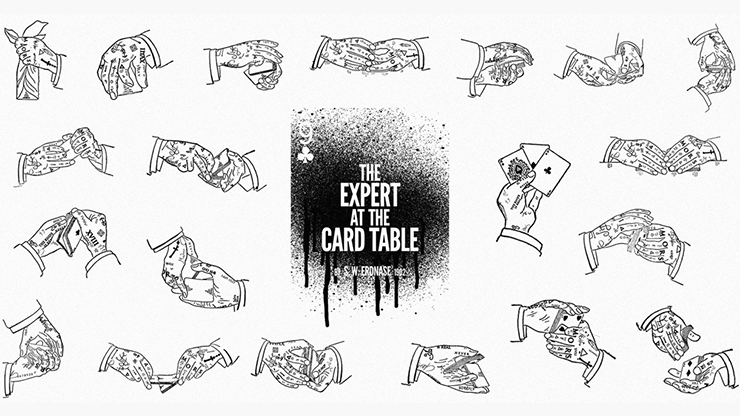
Daniel Madison is releasing a version of Expert at the Card Table today. It’s not updated, it’s not annotated. It just has his tattoos added to the hands in the illustrations.

Very funny, Andy.

I’m not kidding. I wish I was this funny. If I was going to make up a stupid Daniel Madison related project it would have been like, a whiskey-scented Octopalm, or a sponge ding-dong with a Prince Albert piercing. I could never have conceived of something this good. It’s legit. Here’s the link.

63274-alt4.png

I know what you’re doing right now. You’re feeling your face to check the beard growth. “Clearly,” you’re thinking, “I was trampled by a team of clydesdales and I have been in a coma and I’ve just woken up and it’s April Fools Day. Oh please, benevolent God, please let it just be four months that I have been away. I shan’t be able to bear it if I have lost multiple years of my precious life with my sweet Alma, and our children, Effie, Jasper, Silas, Edith, Fannie, Wallace, Owen, Ida, Josephine. And Lula, Archie, Claude, Mabel, Leona, Clarence, Cassius, Mercy, and Bernadette. And the little ones, Samson, Augustine, Ephraim, Calvin, Jack, Grover and Marjorie. And the triplets, Chester, Adeline, and Floyd. Blessed be! Please, dear lord. Clearly some time has passed because there is no chance this is not a joke product. And you don’t promote joke products on the 19th of November. You do that on April first. Damn those abominable clydesdales!”

No. It’s not a joke (I don’t think). Someone put money into this project and is hoping to recoup it. Hey, I hope they do. I have my own ideas for some essential editions of The Expert at the Card Table that I will be releasing soon as a c̶a̶s̶h̶ ̶g̶r̶a̶b̶ valuable contribution to the art.

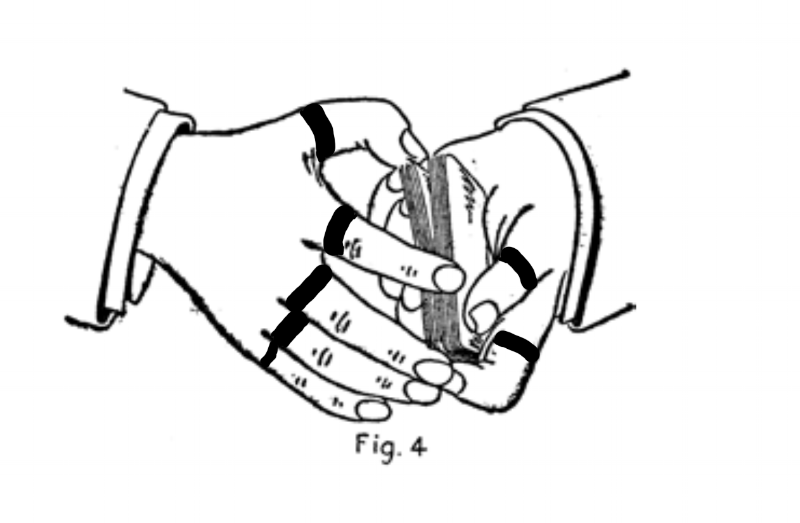
Do you wear a ring? Well wouldn’t you like to see illustrations of someone who is also wearing a ring? We’ve got you covered with…

The Expert at the Card Table: Ring Edition

Screen Shot 2018-11-18 at 7.20.42 PM.png

Do you wear a lot of rings? Is wearing a lot of rings your “thing”? Do you think it comes off cool but everyone around you thinks you’re trying too hard? Well get ready for…

The Expert at the Card Table: A Lot of Rings Edition

Screen Shot 2018-11-18 at 7.29.01 PM.png

Are you black? No you’re not. You’re reading a magic blog. I’m just playing the odds here. But let’s say you’re black. Aren’t you sick of the cracker’s “bible” of card magic? A lot of privilege in that book, if you ask me. Must be real nice for whitey to be able to pick up any magic book and find illustrations that look like him. Well, I’ve solved that problem with…

The Expert at the Card Table: Soul Edition

Screen Shot 2018-11-18 at 6.35.16 PM.png

Lose two fingers grabbing a handful of peach smoothie from a running blender?

The Expert at the Card Table: Smoothie Lover Edition

Screen Shot 2018-11-18 at 6.38.02 PM.png

Are you wearing short sleeves and have hairy arms?

The Expert at the Card Table: Robin Williams Commemorative Edition

Screen Shot 2018-11-18 at 6.43.37 PM.png

Do cocaine?

The Expert at the Card Table: Cokehead Edition

Screen Shot 2018-11-18 at 6.51.12 PM.png

Super gay?

The Expert at the Card Table: Dong Lover’s Edition

Screen Shot 2018-11-18 at 7.16.43 PM.png

Inspired by this release, this Friday’s post (which is black Friday and the unofficial start of the holiday shopping season) will be a guide to magic’s least essential products. Feel free to nominate any products you think qualify via email.

Gardyloo #81

I need some help tracking down a video I used to have. I don’t remember much about it, but I do remember I learned cool magic from it. Any ideas?


Cafe Soaps: Turner Watch Edition

I always love a good Magic Cafe soap opera. These are threads on the Cafe that go on for at least 10 pages (although 30 or 40 is more indicative of a true Cafe Soap). That’s enough time for characters to emerge and plot lines to come and go. With the “Chef’s Special” section of the Cafe having long gone defunct and discussion and reviews of magic tricks now more in the domain of youtube and facebook, the Cafe Soap is possibly the one genuinely unique thing the Magic Cafe brings to the art at this point.

If you don’t make it a point to follow threads on the Cafe—if you have something better going on in your life, like…oh, say… gradually gauging your rectum over the course of a month with a traffic cone—I will try and keep you abreast of any good soaps that you might miss.

The best drama currently on the Cafe is in regards to the Turner Watch. A gimmicked watch project that was funded this summer and is maybe about to come out now after a short delay.

Lots of good stuff in this thread, I won’t spoil it for you. But if you’re asking if they produced a gimmicked watch with the name of that gimmicked watch on the face of the watch itself, the answer is yes.

In my opinion, the biggest problem is that we might be, like, two months from the concept of a watch with hands that you can move remotely seeming commonplace. You might be able to fool your grandpa with it, but many people under the age of 50 will probably be familiar with a similar technology. And then they’ll be like, “Oh, is this one of those watches you can control with an app?” And you’ll be like, “Uh…what? No.” And they’ll be like, “Hmmm, maybe I’ll google the name printed across the front of the watch then.” And the next thing you know they’re on the watch’s web page, or their instagram, or that Cafe thread, or maybe here (Hi!).

You might say, “Well, it’s not that common now. Maybe 1 person in 10 has ever heard of a hybrid watch.” Okay, that means if you perform for a group of 6 people, you have a 50% chance that someone in the group will have a good idea what’s going on. What do you think the conversation will be like after you leave that group?

Hey, this shit happens. Before app-controlled lights were completely common, I used them as part of a trick a couple of times. That was just a few years ago, but it wouldn’t fly now. (I still use them in some of the more overt, non-secret ways mentioned in that post.)

With any luck, the people who bought the watch will be able to use it for a good few days before everyone they perform it for is like, “Oh yeah, my nephew has one of those watches.”

Actually, the most depressing thing in that thread are the guys who are like, “I perform corporate magic. If one of my clients saw me wearing a watch like this they’d think I was a worthless piece of human trash and never talk to me again.” Like, sweet christ, that’s your typical audience? Some corny motherfuckers who care about watches? I feel lucky because—while I do engage with a number of very successful individuals—none of them are this type of status-symbol weirdo. I didn’t even know such people existed outside of movies from the 80s.

“Hey, maybe they’re assholes, but they pay well.”

THAT’S WHAT WHORES SAY!


Okay, i kind of get it when someone who sells casino supplies or something like that misguidedly writes me to see if they can have a sponsored post on this site. Clearly they haven’t spent two seconds here to have any idea of the type of content, but I at least know what sort of keywords they entered to find my site.

Yesterday, however, I received an email with the subject “Salvaged Cars,” and I have no clue why I was targeted for this.

Hi there, 

I assume you deal with salvaged and rebuilt titles on cars?

If so I have an article already written that is relevant to your business that overlaps with auto insurance covering the restored, rebuilt, or salvaged car. The article helps people understand that once the salvaged car is rebuilt and restored, people need to get it insured. 

Would you like to look at it?
I work for an insurance comparison company called QuoteWizard and have a lot of knowledge on this subject. 

I am only allowing one company to use it for duplication concerns. Shall I send it to you? 

I am looking forward to your thoughts,

Nathan Barber
QuoteWizard

My response:

Hi Nathan. It’s a shrewd assumption on your part that I deal with salvaged and rebuilt cars. I haven’t explicitly stated this on my site, but it has been subtext for most of my posts. Like when I talk about “mechanic’s grips.” That’s a nod to the manner in which people who rebuild cars hold their wrenches.

I’m a little bummed you’re just bringing me this offer now. It would have been great to have your already written article for inclusion in my forthcoming book, but sadly that is in the hands of the publishers.

I would very much be interested in this article. Would you accept $8000 for allowing me to be the “one company” that is allowed to distribute it? Originally that money was going to be used to make a pilot for my improv group (The Shennanigoats) to pitch to the WB. But I’m not sure if that’s going to happen because Kurt and Tonya are fighting, and Kurt might quit. Also The WB doesn’t exist anymore. Do you do improv?

Anyway, great to hear from you. Can’t wait to read the article! Sounds like it’s a real doozy.

Your pal,

Andy


Can anyone put me in touch with someone at L&L? Specifically I’m looking for someone who can connect me with the regulars from the old L&L audience. I have some projects I’m thinking about that I’d like to involve them in. I’m not kidding.


Oh, and you can forget about that first question at the top of this post. I found the video I was thinking about.

LearnCoolMagic.gif

Critical Conditions

A few years ago, we had the ability to quantify “suspicion” in the magic focus group testing we did. I’ve mentioned this before, but the way it would work is the people watching the performance would rest their thumb on the screen of an iphone and they would raise their thumb on the screen to indicate a moment when they thought something suspicious was happening and lower it back down when they were no longer suspicious. See the post Suspicious Minds for more details on this.

The app would record the position of the person’s thumb on the screen over time, so we would get a little seismograph type read out when we were done. We could then watch that graph alongside a recording of the performance and see the areas where suspicion was generated.

It was super helpful to be able to capture this information and it was also a gigantic fucking pain in the ass. We had to jailbreak our own phones to load the app on them. Then we had to give our phones to the respondents who would manhandle them with their grubby hands. And we could only perform for a few people at a time because we only had a few phones to go around. Then we would have to go through everyone’s feedback individually. It was a lot of work.

In an ideal world we would have had an app that anyone could download and that would aggregate all the feedback from each performance into one average “line of suspicion.”

I think we’ve now identified an app that will allow this to happen and we will likely be using it next year in our testing.

For today I want to give you the results of something we tested a few years ago which is related to Monday’s subject.

Before I started this site, most of the testing we did was to settle disagreements.

“People understand when something’s ‘floating’ it’s really just dangling from something they can’t see.”

“No they don’t.”

“Okay, let’s test it.”

“Many people know that when you borrow a bill and make a gag about keeping it and put it in your pocket, you probably switched it.”

“No they don’t.”

“Okay, let’s test it.”

So, one time, two of my friends had a disagreement about a business card peek they were using. The peek was essentially this: The spectator writes something on a business card, the performer buries it in the stack of business cards. Then, after he goes through whatever his process is, the magician turns over the top card and writes the word or picture he “received” on that card.

The method is essentially a tilt and a neck-tied double turnover and an adjustment of the cards. I’m not going to go into too many details. I assume this method is ancient, but if not I don’t want to completely give away someone else’s idea. There are enough details there for you to figure out what I’m talking about.

Anyway, the debate was this… Magician A would take the card back and just put it back in the “middle” of the pile without saying anything really. Magician B would take it back and say, “I’m going to keep it here, right in the middle of this packet of cards. So there’s no way I could see what you wrote on it.”

Magician A’s contention was that people could see what you were doing and they would make their own rationalization for it. “Oh, he’s putting it in the middle of the packet to hide it away.” And because they were telling themselves this, that it was much stronger than you giving them the rationale. If you say you’re going to put it in the middle of the packet, then you give them something to be suspicious of. “Did he really do what he just said?”

Magician B felt his way clarified the conditions and that people wouldn’t be any more suspicious whether you said something or didn’t.

So we had a third person, Magician C, perform the effect for 30 people in ten groups of three. For 15 people he performed it as Magician A would, for 15 he performed it as Magician B would.

The results? Magician A was right. When you say, “I’m going to place this card back in the middle of this stack of cards,” there is much more suspicion generated than when you just go ahead and do it.

But, that’s not the complete story.

Because while there was more suspicion on the replacement of the card when the magician explained what he was doing, when the magician didn’t explicitly state he was placing the card in the middle of the stack, there was more suspicion later on when he later turned over the top card to write down the word he received.

And, in the end, Magician A’s version (no narration of the replacement) scored lower when the tricks were rated on how strong/”amazing” they were. Why? My assumption is because the magician never stressed the conditions that made what was about to happen impossible.

Because people’s memories are imperfect and they don’t know what’s about to happen, they don’t always concentrate and absorb what you think is obvious. In this case they didn’t really take in the fact the card was placed in the “middle” under (supposedly) many cards. So when the magician went back to the stack later on, they may have thought their card was near the top and therefore in a position to be looked at.

Whereas the other group thought, “He says he’s going to place my card in the middle… is he really doing that? [Suspicion goes up.]… Okay, it seems he is.” So later when you turn over the top card they have a more concrete memory that their card is in the middle of the stack.


Here is my process when creating a “script” for an effect where the conditions don’t get lost. (I don’t really sit down and write a “script” per se, but I do have an idea of what kind of beats I want to hit during the presentation.)

Step 1. I create a version of the script that just explicitly states all the conditions that will make what they’re about to see impossible. “These cards all have red backs. They’re going to remain in your hands and I’m not going to touch them. You’re going to have a free choice of a number. Blah, blah, blah.”

Step 2. I determine at what point in the presentation the audience knows what the effect is and I leave in all the explicitly stated conditions up until that point (at least).

For example, one thing you often hear is, “Don’t say, ‘My hand is empty,’ just show it empty.” But that’s only true in certain circumstances.

Let’s say the effect is Card to Pocket. You’re my spectator. If I say, “Your card will travel to my pocket,” you now know what the effect is. So now I can just flash my empty hand before I reach in my pocket and you’ll know that that’s important.

But let’s say you don’t know it’s card to pocket. I’m just in the middle of a card trick. I flash my hand, I reach into my pocket, I pull out a card, I turn it over and it’s your card. But you see… you didn’t know that was going to be your card, you didn’t know I had a card in my pocket, you didn’t even know I was going to put my hand in my pocket, so you don’t necessarily know to register the moment I show my hand empty. Your memory is likely to be that you think my empty hand pulled out a card, but you’re not sure because you didn’t know to take note of it. So in that instance it would make sense for me to call attention to my empty hand.

We often treat spectators like they’re cyborgs with cameras for eyes, noting everything that happens. But at least 80% of the time, I’m guessing, that’s not the case.

So I leave in all the explicitly stated conditions until the point where the spectator would know what the effect to come is. If that effect is meant to be a surprise, then I need to leave the clearly stated conditions in the whole way through.

But won’t that blow the surprise of the trick?

In some tricks it will. So I now go on to Step 3 to attempt to alleviate that.

Step 3. I go through and try and rewrite any of these overt statements in a subtler way, or create processes that emphasize the same points in a way that is clear and memorable. For example, in the John Carey trick from Monday. I could say, “I have eight cards and they all have red backs,” and that would establish the conditions in a straightforward way. But you might feel that spoils the color change at the end.

If that’s the case, I need to say or do something that achieves the same purpose in a subtler way. I could ask someone to remove eight cards from a red-backed deck (and then switch in the other four). There would then be no doubt how many cards are involved and what color the backs are. I wouldn’t need to state it.

But if I can’t replace the overt statement with something more subtle that will still get the job done, then I don’t. I just leave it in there. I can’t just assume the audience will recognize and remember some gesture on my part that establishes one of the conditions of the effect.

Step 4 (optional). I will add in some lines that may misdirect people’s suspicion. “Don’t run when you’re not being chased” would tell us that we should never say, “I have here an ordinary deck of cards.” Okay, but what if you do really have an ordinary deck of cards? If so, you might be able to direct someone’s suspicion towards the deck and away from some other area where you’re being a sneaky bitch. At the end of the trick they may say, “Wait, let me see that deck,” because you’ve aroused their suspicions. But if that’s the case you should be fine because you’ve “run” away from the solution.

When I have a trick that’s not hitting with my audience like I would expect it to, before worrying too much about the presentation, I first make sure the conditions are clear to the spectator. Because if those aren’t clear, it won’t matter what the presentation is. Magic is ultimately the defiance of the conditions we know to be true. The more definitive the conditions are, the stronger the magic is.

Jogging

From the post, “If It's All The Same With You, I'd Like to Never Fucking Hear These Three Things Ever Again, Thanks” From the Magic Circle Jerk blog, April 15, 2005.

“Don't run when you're not being chased."

First off, even non-metaphorically it doesn't make that much sense. There are plenty of reasons to run when you're not being chased. Maybe it's raining out. Maybe you're trying to drop some pounds. Or maybe you got a little turd beginning to inch its way out your butthole so you decide to run home and the whole time you're thinking that maybe the running is actually making it worse, like maybe your scissoring legs are squeezing your bowels as you would squeeze a toothpaste tube, and maybe you should just walk or something, but hell now you really gotta go. You know what happens if you only run when being chased? You shit your drawers, that's what.

“Don’t run when you’re not being chased,” is a seductive bit of advice for the magician. First because it’s rooted in some common sense. Second because it sounds like advice that is telling you to play it cool. “Don’t be a spaz. Chill out. Don’t run when you’re not being chased.”

But it’s advice that, in my opinion, has become a little perverted over time to the point where some people are undermining their own effects because they’re so desperate to “not run.”

Here’s an example of what I’m talking about. It’s John Carey performing a trick called Kaleidoscope.

Regardless of whether you think that trick is good or not, there’s a kind of fatal flaw in performing it the way he does in the video. I tried it out myself on a couple people and both said the same thing.

“You never showed me the backs of those four cards.”

“Yes I did.”

“No you didn’t.”

“At the beginning. I counted eight red-backed cards.”

“You did?”

“Yeah.”

“I don’t remember that.”

I think anyone who has performed card magic for some time has been in this position. The spectator has failed to notice some element of the effect during the initial stages, and then later on you have to, sort of, retroactively convince them you did something amazing.

“No, no,” you say, “The cards were all face down.”

“They were?” they say.

“Yeah, when we started. I spread the deck and the were face down.”

“Ok… yeah… I don’t remember that.”

And you’re just thinking, “Agggh…Fuck this dude. I’m never hanging out with him again.”

The problem is that (at least in this particular performance) John never clearly demonstrates he has eight red-backed cards. Yes, he shows them at the beginning using a Hamman Count (or something similar, I don’t know my shit.) But without drawing attention to it, why would he expect anyone to ever absorb that information? He’s talking to them when he does the count so they’d be looking at his face, not his hands at that moment, so how are they ever expected to understand what the situation is at the outset?

The issue is, we’ve come to feel that saying something like, “I have eight cards and they all have red backs,” is bad patter because you’re emphasizing something that should be obvious. You’re running without being chased.

But here’s the thing, at some point in your trick you need to emphasize that which contradicts the magic effect to come. This is what magic is. If they don’t understand that the cards are all red, or that you never look towards the business card with their word on it, or that the coins never leave their sight, then there is no trick.

And, in fact, “I have eight cards and they all have red backs,” is bad patter. But it’s serving purpose. If you’re going to remove that patter, great. But you need to do something to serve the same purpose. Certainly there are more elegant ways to emphasize the color of the cards without just saying it directly. You could have all eight picked from a red-backed deck and switch in the four odd-backed cards during the strip-out. Or you could show the cards face-up first and then say, “All the cards are different on this side,” turn them over and Hamman Count them, “But they’re all the same on this side. Because this is a demonstration in free choices and blind choices,” or whatever the point of your trick may be. Regardless of what you say or do, you can’t just eliminate the part where you establish what the situation is at the start of the trick.

But I don’t want to spoil the surprise of the different colored backs by indicating the back color might be important in some way.

I get that. But here is what you’re shooting for then, “Oh wow, different colored backs! Wait… did I ever see these backs originally?” That’s the best you’re going to get if they’re never convinced they’re looking at eight red-backed cards.

Carey’s trick is just an example, of course. This is an issue with all sorts of tricks. Not just card magic or visual magic.

Remember, the audience doesn’t know where things are going, so they don’t know what to focus on unless you tell them.

You would be shocked if you knew how many people walk away from a business card peek thinking, “Well, he must have looked at the card at some point.” Only by strongly emphasizing that you will never look in the direction of the card will they ever be certain of it.

But if I just turn my head away they’ll know I can’t see. Possibly, but they’ll never be completely sure. I’m in a cafe writing this. There is a girl sitting next to me. Has she gotten up from her table at all since I’ve been here? No. At least I’m pretty sure not. But I’m not 100% sure because I didn’t know that was something to concern myself with.

But surely spectators know to be concerned about whether or not you see their card. You would think so, but I can’t tell you how many times in the testing I’ve been involved with, that someone will get information via a peek and the spectator, when breaking down the effect, will say, “He must have seen the information some how.” We’d ask if they saw the magician look at the card. “No, but he must have.” This type of response would only go away when we consistently emphasized the card was in a position where it could not be looked at.

(This, by the way, is one of the decent justifications for using a peek wallet. “For this to work I need to hold your card, but I don’t want you to think I sneak a peek at it while it’s in my hands so… let’s put it in my wallet.”)

This is something I have to remind myself over and over because my instinct is that these things should be done with some subtlety. If we were real mind readers/magicians, would we constantly be emphasizing the conditions? Probably not. But most of the people you perform for in social situations don’t believe you’re a real mind reader or a magician. So that argument doesn’t fly.

There are certainly situation where “don’t run when you’re not being chased” makes sense. But it doesn’t mean you shouldn’t establish the conditions of an effect or make clear the nature of the impossibility.

If a friend of mine can track down the data, Wednesday’s post will have some information about a similar concept we tested years ago in our focus groups. Something that had an interesting twist in how the results turned out.