
Charms
/This is another one for the Jerx Glossary, which I will have to update soon.
Subscribers to The Juxe know that one of my favorite albums this year is Moisturizer by Wet Leg. And my favorite song from that album (and one of the finest love songs ever written) is “Davina McCall.”
I was watching a live performance of that song on YouTube a couple of months ago and noticed something hanging from the guitars of Hester Chambers and Josh Mobaraki, the lead and rhythm guitarists for the band.
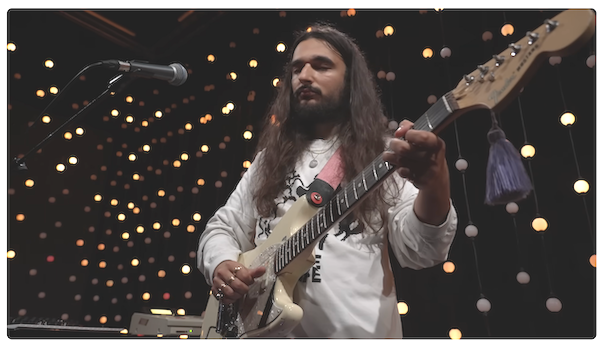
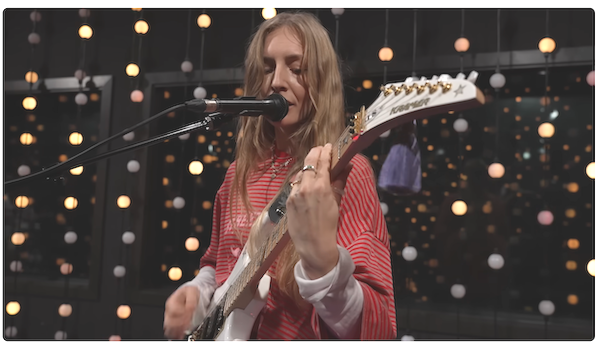
When I finally watched the video on a bigger screen, I realized they were just fat tassels or something along those lines.
But on the small screen of my phone, I thought they were small cloth bags. They reminded me of the things you see in movies and TV shows about the occult or witchcraft—“charm bags” or “hex bags.” Little pouches stuffed with herbs, crystals, hair, symbolic tchotchkes—whatever—that are supposedly for cursing someone, protecting someone, or casting a spell. I don’t really know. It’s witchcraft, not science.
And that made me think: wouldn’t it be funny to learn an instrument in secret and then surprise people in my life with my ability to play that instrument, but only ever do so when I’ve placed this strange bag on it. The unspoken implication being that this little object is somehow what’s letting me play the thing. Andy could never play guitar. But now he can? But only when that little bag is dangling from one of the tuning pegs?
I would always laugh it off, of course. “That’s ridiculous. I just like the way it looks.” But any time I pick up a guitar without the bag on it, all I can manage is dissonant twanging.
It’s a long way to go for something that’s only on the verge of being a trick. But I’ve always thought that if there was some skill you were planning on learning anyway, learning it in secret—without telling anyone—is a good way to go. Then you can create an interaction later on where you seemingly acquire this skill instantaneously. People appreciate these little fantastical touches in their lives, so long as they don’t get the sense you’re actually trying to sell them on it.
And that whole idea—linking some odd little element to whatever’s about to happen—is really the heart of what I’m calling “Charms.”
Charms are a subset of Imps. What makes them their own thing is that you don’t explain them. They’re simply things that are present or happen during an effect and draw a bit of attention because they’re just slightly peculiar. But you never call them out yourself.
Types of Charms
Unusual Objects — Examples:
A small cloth bag of unknown contents you hang on a doorknob before a trick.
A jade rabbit figurine you tap against objects before using them.
Jewelry — Examples:
A thin ring you slip on for certain effects.
A pendant you pull out from under your shirt only during specific routines.
Consumables — Examples:
A mint or pill you pop before reading someone’s mind.
A small sip of tea before a coincidence effect.
Gestures — Examples:
A syncopated tapping on your temples before naming a thought.
Drawing a small circle in the air over an object before vanishing it.
Incantations — Examples:
A short phrase or word of unknown origin murmured under your breath.
Environmental — Examples:
Cracking a window open one inch before a mentalism routine.
Changing the room’s lighting before an ESP test.
Clothing Adjustments — Examples:
Rolling up just one sleeve—always the same one.
Buttoning your shirt up to the top before starting.
Scents — Examples:
Striking a single match and letting it extinguish naturally.
Dabbing a bit of essential oil onto your wrist beforehand.
Timing — Examples:
Delaying a trick until a specific, odd time: “Yeah, I can show you something. Let’s do it around 10:17.”
Counting off a certain number of seconds before revealing a change.
Audio — Examples:
Spinning an old coin and taking a breath as it rings to a stop.
Clicking a pen twice—pause—then once more as they focus on their thought.
For these things to register as “Charms,” they need to be repeated. If you do the pen-clicking thing once, then it’s just something that happened once. But if they notice it multiple times in a routine, or over the course of multiple performances, then it becomes something potentially intriguing.
Critics of this technique will say that it turns simple tricks into something bordering on the occult: whispered incantations, ritualistic gestures, etc. And yet these same magicians will perform 1000 tricks where the magic happens “when I snap my finger.” That too is a Charm. It’s just the most unoriginal, boring, easily dismissed version of one.
If anyone asks about your Charm, just brush it off. “I say that before each trick? Huh. Honestly, I’m not sure. I guess it’s just something I picked up somewhere.” “I always button my shirt up to the top before reading your mind? No, I don’t. Do I? Well, it’s nothing, it’s just a habit, I guess. I don’t need to do it.” Then you try to read their mind with your collar open and fail miserably.
The idea isn’t to get people to accept the “power” of your Charms. Like the tassels on the guitars, Charms are ornaments hung on an effect that embellish the experience with a little extra texture, aesthetic appeal, and mystique.