How To React To the Spectator As Magician

The most difficult thing about performing a Spectator-as-Magician/Mentalist plot is giving a believably impressed, amazed, or surprised response.

It's one thing if my premise is, "I knew you'd be able to do this." But if the premise involves me being taken aback by what I'm seeing, it can be hard to play that off realistically.

"Oh my god! This is crazy! How is this happening??"

That kind of reaction can take what should be a cool moment for the spectator and turn it into a joke. It's easy for it to come across as totally fake.

So what do you say in this situation?

My current answer is this: I don't say anything.

Instead, I pose.

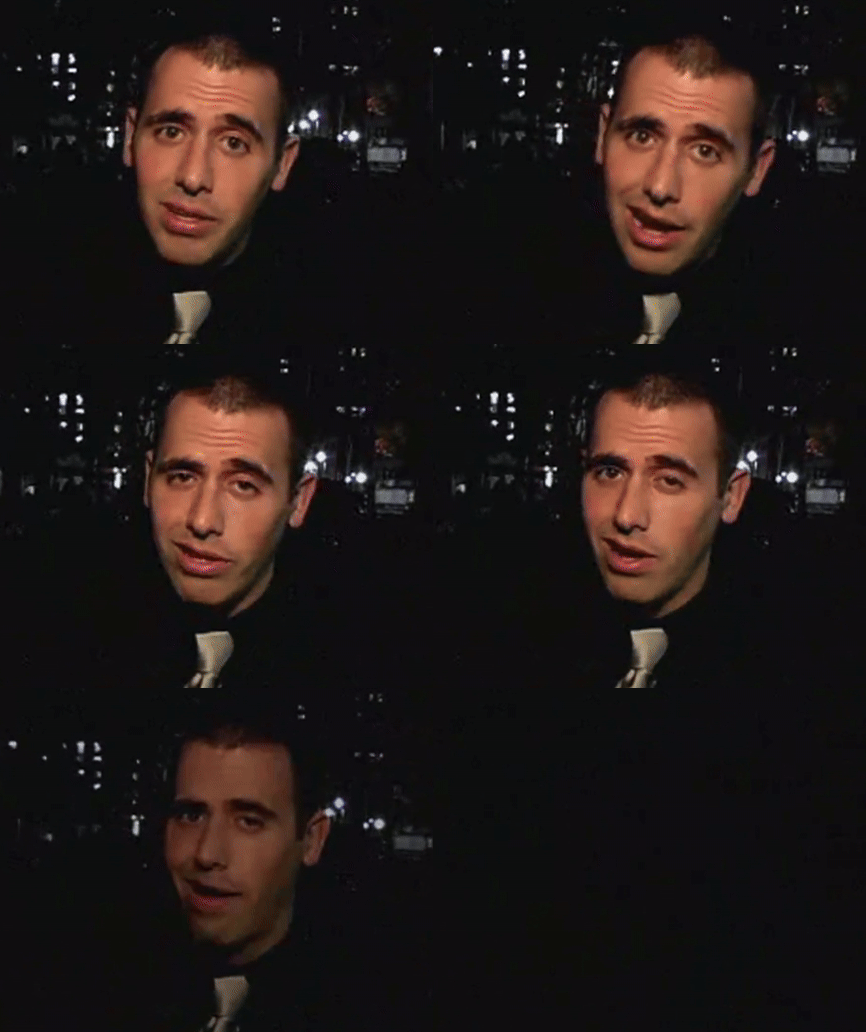
Usually, I'll put my hands together like I'm praying and touch them to my slightly open lips or my chin while I stare at whatever it is they're doing. This is a fairly standard look of being enraptured by something.

Other times I'll do some kind of semi-unusual action. I'll gently pinch and pull the top of my ear away from my head. Or I'll put my hand in a loose fist and scratch my forehead with the back of my thumbnail. Or I'll pick at my lips absentmindedly. During any of these, my mouth will be slightly open and I'll be staring at the cards—or whatever it might be.

These aren't gestures that you would necessarily associate with awe or amazement, but they're the sort of thing you might do if your mind was completely captured by what you were seeing. You wouldn't stand there with a wry smile and a cocked eyebrow. You'd just be distractedly doing whatever as your mind processed what it was seeing.

When the effect has concluded, I'll shake my head a little, smile slightly, maybe shrug.

When I do speak, it's not some profound declaration like: "And now you see the power of the human mind is limitless when we open ourselves up to the possibility of achieving the impossible!"

No. I just say something like, "That's wild." "I'm lost." "That's nuts."

My first full sentence will often be an attempt to dismiss what they did.

"Were you able to see the cards' reflections in the TV or something?"

I'm trying to nudge their mind into the idea that just maybe they really did something impossible. I'm not expecting them to walk away feeling like they're psychic or whatever. I just want it to feel real enough that they'll question it.

The key is remembering that underplaying beats overplaying every time. If you're not a great actor, don't try to act in this moment. Let silence and bewilderment do the heavy lifting. Then, if it makes sense, let a little skepticism creep in. Put them on the defensive—put them in a position where they're trying to convince you that something impossible really did happen.

Mailbag #157

I'm not sure if you're aware, but the Ted Karmilovich conviction info on your blog was referred to on The Magic Cafe thread about the book. It's how I've become aware of it (and your blog).

Several posters on The Magic Cafe thread spoke very negatively about the matter including that they wouldn't buy the book. Then those posts (and all other posts referring to the conviction and your blog) were deleted.

I had no idea about the conviction and I'm staggered he has it, as well as how it's been seemingly suppressed or otherwise glossed over by those in the community who knew. So thank you for mentioning it. Any sort of light on this is extremely important. I wouldn't be happy purchasing the book then finding out about his conviction, so I'm grateful I have that knowledge which has ultimately come from your blog post.—RM

I got a lot of feedback on this from last Friday’s post.

Yes, the story is real. Yes, it’s the same Ted Karmilovich.

You can see the story in the paper itself here, and an article after his conviction here (although you’ll need a paid subscription to do so).

Some people say, “I don’t care.” I’m not suggesting you have to care. I was just relaying information that had recently come my way.

I certainly wasn’t trying to spoil the release of the new hardcover collection of his material.

It’s sort of amazing this wasn’t common knowledge. It was a front-page news story with a long (5-year) prison sentence. And it wasn’t like this happened in the 1940s. It was the early 90s at the dawn of the internet age.

It’s definitely something that was known in certain circles. In the August 1995 issue of Genii Magazine, Danny Orleans ends his review of the Mother Of All Book Tests with this:

Some of you will say the high price “is criminal” and Mr. Karmilovich should “ do time” for gouging the magic buyer. Perhaps that would give him time to think up another great mental effect.

As I said, make of the information what you will.

You don’t have to care at all.

Or you may feel it was just a one time (seven month) mistake on his part.

Or you may say, “I can separate the art from the artist.”

Or you may decide you don’t want to spend $250 on a massive tome of material of a convicted sexual predator whose good stuff has been available for a long time.

All of this is fine with me.

But, if you come at me saying I’m “ruining his legacy,” get ready for me to dunk on your dumb ass relentlessly.

You can’t “ruin someone’s legacy” by noting something they did. That is their legacy.

As for the Magic Café deleting references to this, I don’t know what’s going on there. Maybe some of the decision makers there like Steve Brooks, Tom Cutts, and David Scribner don’t want to establish a precedent of magicians being exposed for taking advantage of vulnerable children. Maybe—for whatever reason 🤷‍♂️—they prefer sex crimes get swept under the rug. I’m not sure why that would be though 🤔. Hmmm. Well… I guess they’ve put us in a position where we just have to draw our own conclusions.


Do you have a “Best of” list or a Trick of the Year for 2025? —KL

I don’t really do “best of” lists. When it comes to identifying my favorites releases, I do that in real time as the year passes in the monthly newsletter. It’s not a collection of reviews of everything, it’s just my favorite things that I started performing that month. So to create a list of my favorite things I discovered that year, you can just take the items I write up in the newsletter. That captures everything.

But, to give you some answer, I’ll mention two of the most useful effects that were released this year. These are probably the things I performed the most because it was very easy to find opportunities to include them at the spur of the moment. They’re not locked in to a certain premise or presentation. And they’re both dead easy.

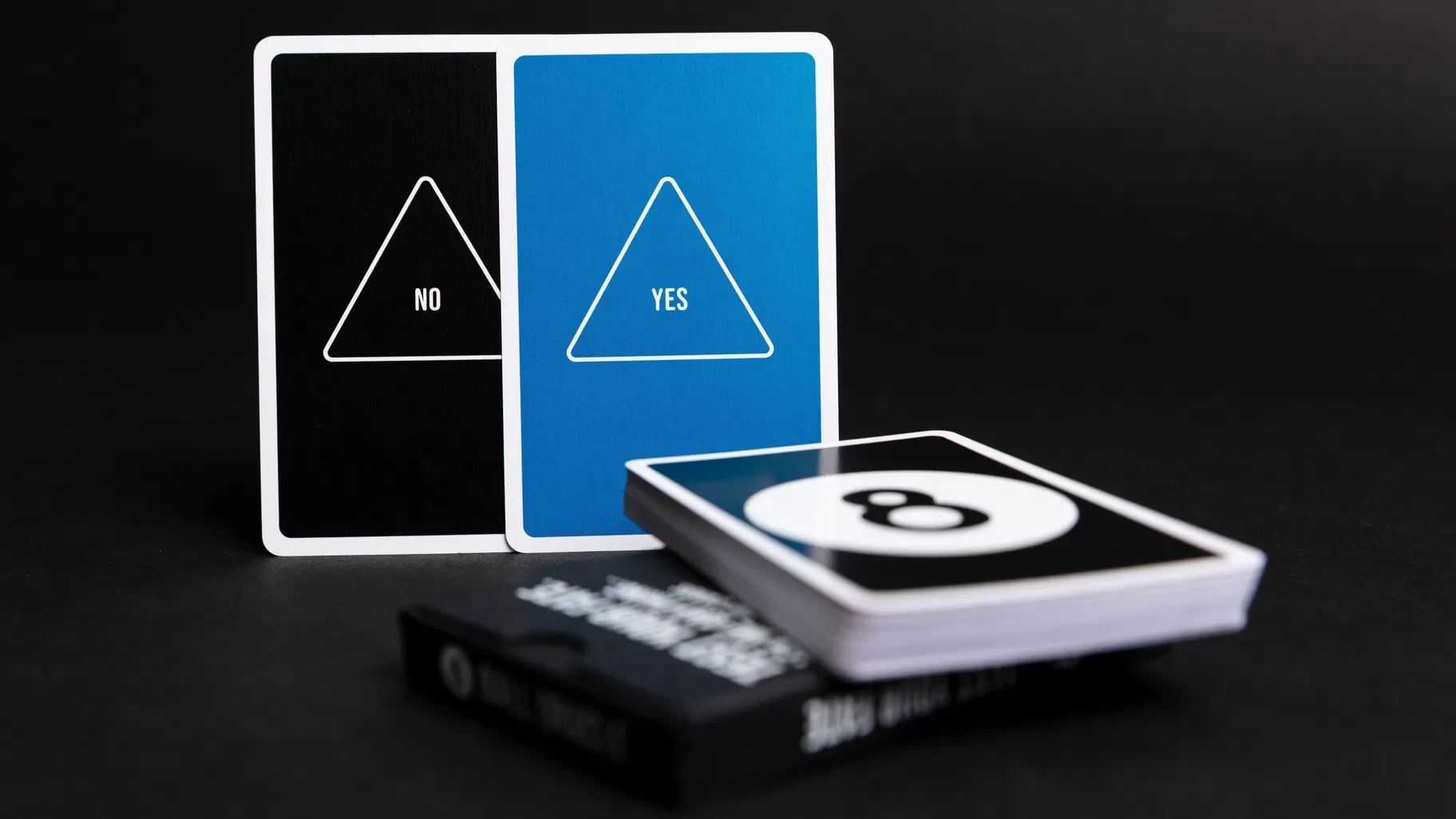
Modern Oracle by Chris Rawlins and John Cottle

A set of Magic 8 Ball style cards that give yes/no answers. You can use the cards to reveal thoughts or cards or any known entity, really.

Or just have the deck accurately answer any yes/no question someone asks it.

There are more approaches to this than you’d initially expect.

People are familiar with the concept of a Magic 8 Ball, and the idea that this deck of cards might exist seems totally feasible. It can be presented as a fun novelty item. Or a something you thought was a fun novelty item, but turned out to be something stranger.

Easy, examinable, familiar, flexible.

SAM by Christian Grace

I generally don't like tricks with direct presentations. For example: "Think of a word… Look, that's what I wrote down!" I find that sort of thing unpalatable.

But I do love tricks with very direct methods, because they give me freedom to dress them up however I want.

That's what I like about SAM. You simply ask someone to pick up on the word you're thinking of, then immediately reveal they got it right by showing they're very close to what you searched for on your phone moments ago. (This can also be framed as your prediction being correct.)

With a modicum of creativity, you can build this into all sorts of premises.

I've found the slightly-off nature of the reveal goes a long way toward eliminating the "obvious" solution.

Second only to Echo Sync on the Jerx App, this was my most used phone trick this year.

More information can be found here.

Dustings #136

A Note to All GLOMM Lodges

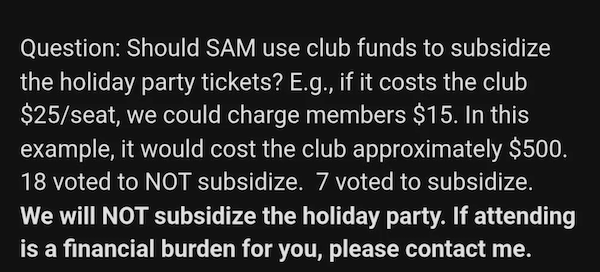
I was thinking about this old Creep Updates post, and the email that was screenshotted where they were discussing if they were going to help cover the cost of the Christmas party.

Surprise, surprise, they decided not to.

Well, despite the fact that there are no dues in the GLOMM, and it’s not an organization I run, I am happily going to pay your holiday party costs this year, up to $25 per person.

Just send me photos and/or video of the gathering, and let me know the cost and I’ll paypal you the money in return.

Also, it’s a holiday party, so dress up, for the love of God. If you want to be a slob who doesn’t get their holiday party paid for, join the SAM.


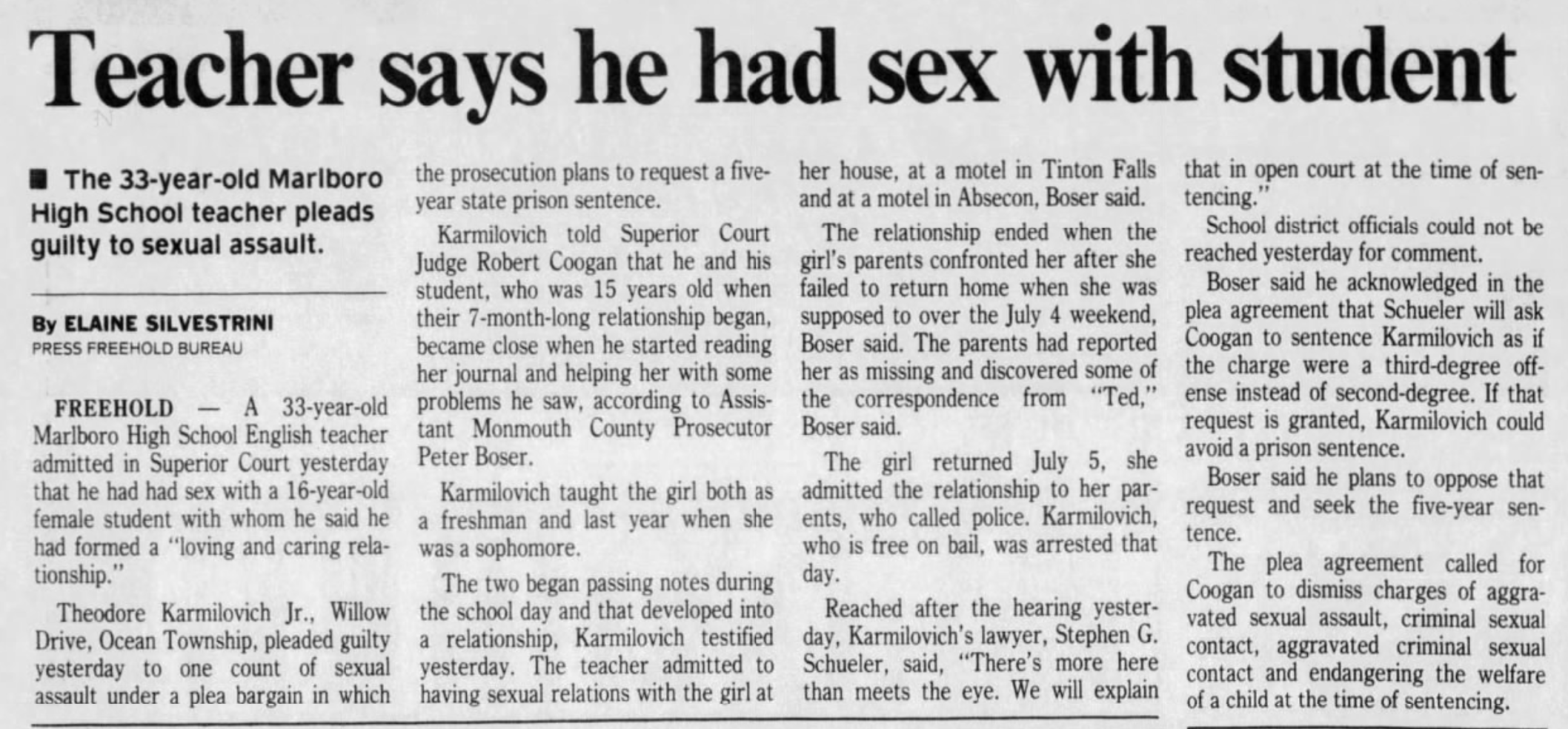
Will this chapter of his life be covered in the upcoming book on Ted Karmilovich?

From the Asbury Park Press, August 28th, 1992

The part where he slept with his 15-year-old student after reading her journal and convincing her he could help with the issues she was dealing with?

I believe that’s known as The Somebody’s Daughter of All Book Tests.


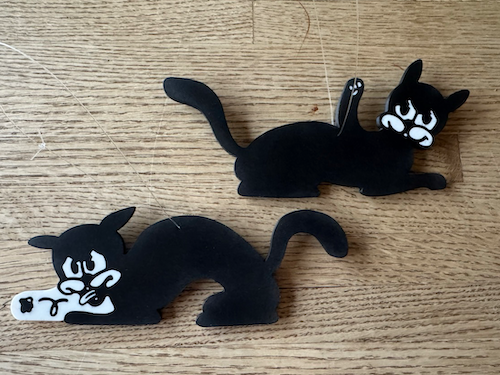
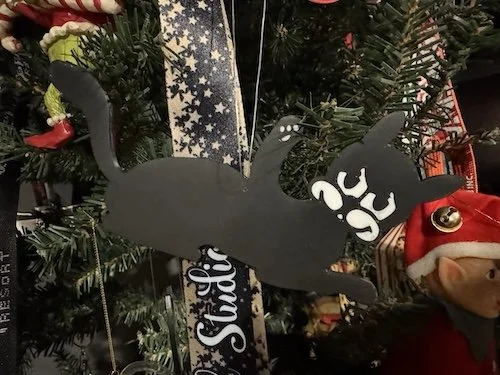
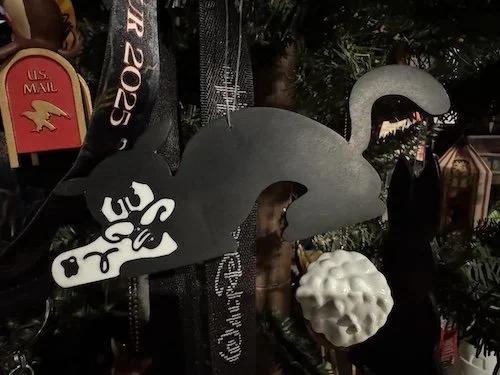
This Christmas, remember the true reason for the season with your very own Jerx Cat ornaments. Printable files can be found here.

From the Archives: Oz Pearlman

Given Oz Pearlman’s recent notoriety, I figured it might be fun to dig into the archives and see what I’d written about him on my old site. This was back in the early 2000s, when he was mainly known as Penguin’s product demonstrator. And apparently I’d just seen him in a live NYC show—an event I have absolutely zero memory of.

I wrote:

I don't know how anyone could imagine that having Oz Pearlman demonstrate a trick is a good marketing strategy. What am I missing? Am I the only one in the world who thinks that guy is a total tool? I used to think he was in on the joke; that he knew how lame some of those tricks are and he knew how lame his performance was. But then I saw his "magic" "show" at a "theater" here in New York City, and I realized he's just really a shitty performer. He has some technical skills, but those are offset by a miserable sense of showmanship and stage presence. Oz, get a director, and get a fucking writer too. If you have $35 dollars to blow in the city, I urge you to check out his show. It's such a grim deal. It's like watching Faces of Death and you're seeing a monkey get his head bashed in with a hammer and you're thinking to yourself, "How can I find something so repellent and fascinating at the same time?" In an art-form that many people already consider to be meaningless, an Oz Pearlman show has to be the most meaningless facet of magic on the planet. Remind me not to go to shows that cost $35 and starts at 5 in the afternoon.

So if you’re thinking, “People only trash Oz now because he’s wildly successful,” please note: I was two decades ahead of the curve. I thought he was garbage when he was a nobody. And yes, the critique I made recently is the same one I made back then too. He needs a writer.

Other than that, I mostly just mentioned him in passing on the site.

I suggested his name was confusing. “Oz” already has a magical connotation: Wizard of. And that’s pronounced Ahz. Him making people pronounce his name Ohs was going to be nothing but headaches for him. I suggested he use a different pronunciation entirely: Ooze. As in, “There’s some ooze coming out of my anal pustule.” Looking at him, that felt like the one people would naturally gravitate toward.

Another time, I wondered what was going on with his mouth in this demo and said, “He's talking funny, right? Not funny like what he's saying is amusing, lord no. But funny like, oh I don't know, like he had a zit on his lip and somebody popped it with a baseball bat.”

Or when there was controversy about Oz stealing this Dave Harkey effect where someone runs their finger along a straw and Oz makes it melt where they stop. I came to Oz’s defense and said, “I truly believe that Oz really did invent this trick independently. I've heard that in order to generate realistic expectations, he often creates tricks where women must stroke something that's .5 cm in diameter.”

Now, you might say, “Who’s the joke really on here, Andy? Oz is on 60 Minutes, and you’re still talking shit about him on a blog.”

Look, I’m doing exactly what I want to be doing. Oh, “Oz was on 60 Minutes”? Big deal. So was I. For decades. You don’t recognize my style? A guy named Andy? With a lot of opinions?

Spex Mix: The Wash

You might ask why I have a whole series of posts about ways to have a spectator mix a deck and still retain a partial stock.

The reason is this: I like techniques that move the needle.

And a spectator mix technique is one that does.

You may spend 100s of hours mastering a false shuffle. But the most perfect false shuffle is not enough to undermine people’s knowledge of false shuffles. I’ve had spectators claim a 100% real shuffle must have been a false shuffle. Given that, I don’t really see any reason to work on a false shuffle other than to impress other magicians. And what rational human wants to do that? Oh, gee… Mark Calabrese is impressed by me? Now my life is complete.

Here’s a technique I use when I need to protect a larger group of cards, up to a full suit. It happens seated at a table.

The stack starts on the bottom of the deck. I remove the deck from the case. Spread it and get a right thumb break over my stack.

Now two things happen at once:

  1. My left arm swipes across the table like I’m brushing aside any dust or debris.

  2. My right hand goes to my lap and drops off the stack and immediately comes up and starts dribbling the cards all over the table.

Lay people cannot tell that a quarter of the cards are missing.

Have them wash the cards around the table. When they’re satisfied they’re well mixed, gather up the cards toward yourself into a loose pile. Reach into your lap with your left hand to pick up the stack and slide the loose pile off the table on top of the stack. Square everything and you’re good to go.

If you want the stack to end up on top of the deck, then just do this whole process face up.

You can follow it up with the Jerx-Ose False(ish) Cut, retaining the stack on the top or bottom depending.

There’s nothing revolutionary here. It’s a slight variation on a process I’ve posted in the past, and I’m not even suggesting that was original. But I wanted to include it in the Spex Mix series as it’s something I use quite frequently. It might seem unsophisticated compared to some of the fantastic false shuffles that exist in magic. But it has the important distinction that it can’t be dismissed as a false shuffle.

Charms

This is another one for the Jerx Glossary, which I will have to update soon.

Subscribers to The Juxe know that one of my favorite albums this year is Moisturizer by Wet Leg. And my favorite song from that album (and one of the finest love songs ever written) is “Davina McCall.”

I was watching a live performance of that song on YouTube a couple of months ago and noticed something hanging from the guitars of Hester Chambers and Josh Mobaraki, the lead and rhythm guitarists for the band.

When I finally watched the video on a bigger screen, I realized they were just fat tassels or something along those lines.

But on the small screen of my phone, I thought they were small cloth bags. They reminded me of the things you see in movies and TV shows about the occult or witchcraft—“charm bags” or “hex bags.” Little pouches stuffed with herbs, crystals, hair, symbolic tchotchkes—whatever—that are supposedly for cursing someone, protecting someone, or casting a spell. I don’t really know. It’s witchcraft, not science.

And that made me think: wouldn’t it be funny to learn an instrument in secret and then surprise people in my life with my ability to play that instrument, but only ever do so when I’ve placed this strange bag on it. The unspoken implication being that this little object is somehow what’s letting me play the thing. Andy could never play guitar. But now he can? But only when that little bag is dangling from one of the tuning pegs?

I would always laugh it off, of course. “That’s ridiculous. I just like the way it looks.” But any time I pick up a guitar without the bag on it, all I can manage is dissonant twanging.

It’s a long way to go for something that’s only on the verge of being a trick. But I’ve always thought that if there was some skill you were planning on learning anyway, learning it in secret—without telling anyone—is a good way to go. Then you can create an interaction later on where you seemingly acquire this skill instantaneously. People appreciate these little fantastical touches in their lives, so long as they don’t get the sense you’re actually trying to sell them on it.

And that whole idea—linking some odd little element to whatever’s about to happen—is really the heart of what I’m calling “Charms.”

Charms are a subset of Imps. What makes them their own thing is that you don’t explain them. They’re simply things that are present or happen during an effect and draw a bit of attention because they’re just slightly peculiar. But you never call them out yourself.

Types of Charms

Unusual Objects — Examples:
A small cloth bag of unknown contents you hang on a doorknob before a trick.
A jade rabbit figurine you tap against objects before using them.

Jewelry — Examples:
A thin ring you slip on for certain effects.
A pendant you pull out from under your shirt only during specific routines.

Consumables — Examples:
A mint or pill you pop before reading someone’s mind.
A small sip of tea before a coincidence effect.

Gestures — Examples:
A syncopated tapping on your temples before naming a thought.
Drawing a small circle in the air over an object before vanishing it.

Incantations — Examples:
A short phrase or word of unknown origin murmured under your breath.

Environmental — Examples:
Cracking a window open one inch before a mentalism routine.
Changing the room’s lighting before an ESP test.

Clothing Adjustments — Examples:
Rolling up just one sleeve—always the same one.
Buttoning your shirt up to the top before starting.

Scents — Examples:
Striking a single match and letting it extinguish naturally.
Dabbing a bit of essential oil onto your wrist beforehand.

Timing — Examples:
Delaying a trick until a specific, odd time: “Yeah, I can show you something. Let’s do it around 10:17.”
Counting off a certain number of seconds before revealing a change.

Audio — Examples:
Spinning an old coin and taking a breath as it rings to a stop.
Clicking a pen twice—pause—then once more as they focus on their thought.

For these things to register as “Charms,” they need to be repeated. If you do the pen-clicking thing once, then it’s just something that happened once. But if they notice it multiple times in a routine, or over the course of multiple performances, then it becomes something potentially intriguing.

Critics of this technique will say that it turns simple tricks into something bordering on the occult: whispered incantations, ritualistic gestures, etc. And yet these same magicians will perform 1000 tricks where the magic happens “when I snap my finger.” That too is a Charm. It’s just the most unoriginal, boring, easily dismissed version of one.

If anyone asks about your Charm, just brush it off. “I say that before each trick? Huh. Honestly, I’m not sure. I guess it’s just something I picked up somewhere.” “I always button my shirt up to the top before reading your mind? No, I don’t. Do I? Well, it’s nothing, it’s just a habit, I guess. I don’t need to do it.” Then you try to read their mind with your collar open and fail miserably.

The idea isn’t to get people to accept the “power” of your Charms. Like the tassels on the guitars, Charms are ornaments hung on an effect that embellish the experience with a little extra texture, aesthetic appeal, and mystique.

Mailbag #156

You are writing a lot about creating experiences.

It is easy to create amazing experiences by spending a lot of money. (visit a 3 star Michelin restaurant, tickets for the OASIS world tour ...)

Do you think it is possible to create the same level of experience while being on a budget?

What is your point of view?—SD

“Do you think it is possible to create the same level of experience while being on a budget?”

Yes. In fact, you’re more likely to create a memorable experience with little money.

Money buys spectacle, which can lead to great experiences, but frequently doesn’t. The bigger the investment, the bigger the expectations, and expectations kill experiences. You stop being present and start running a cost–benefit analysis on the moment.

What night of the year do people plan and invest in the hardest? New Year’s Eve. What night reliably disappoints the most people? New Year’s Eve. It’s not a subtle correlation.

A $600 dinner may be a great experience, if you’re lucky. But more often than that it’s like, “$600 for this? I mean. It was good… but….”

And even when you’re the one picking up the tab, the money can still distort things for the other person or people. They may start feeling like they’re supposed to react a certain way, or enjoy it at a certain level. They might begin overthinking the whole situation. Why did he spend this much? What does this mean? Am I showing enough appreciation? It stops being a shared moment and starts being a transaction they’re now emotionally managing. The whole thing becomes less pure.

I’ve spent years thinking about how to turn time with someone into something they remember. I think I have a book’s worth of stuff to say on it, actually. I can’t get into too much detail, because it hasn’t crystallized into a form suitable for sharing yet. But I believe there are elements you can put into place that are likely to lead to peak experiences. And none of them really require much money.


I know so many people who read your site daily, which makes me wonder if anyone has ever tried to snatch you up to write the marketing emails for one of the big magic companies. If I started my own online shop, what’s the possibility I could bring you on in that capacity?—DS

I feel like someone asked this before.

I think writing magic marketing emails would be fun. I’d happily do that for a living wage. But no one would pay a living wage for that, so the “possibility” of that happening is next to zero.

If I did it, I’d want to allow people the ability to opt-in to an uncensored version, so I could say whatever I wanted. “Pull your pants down before you watch this demo unless you want your mom to find a bunch of crusty cum stains in your undies when she does your laundry this week.”

See? I could do it just fine.


I don't wanna keep bringing up Oz but I found this interview with someone who had her PIN revealed by Oz. Apparently he kept insisting that he wouldn't use her real PIN and then revealed it on air.

Just wanted to hear your thoughts on this. I feel like a lot of magicians have a terrible sense of people's personal boundaries and will deliberately break them for the sake of surprise.—AO

Yeah, I don’t know. Craig Petty suggested in a recent video that maybe it was some kind of miscommunication, but after skimming through this one, it doesn’t really sound that way.

It sounds like Oz pre-showed the woman to “make up a new PIN code” that was mathematically based on her real PIN code. And, obviously, that process allowed him to get her real PIN code, and he understood revealing that would be much more impactful than revealing some random four-digit number.

Is it a shitty thing to do? Yeah, kind of. But I also think Oz understands he has a relatively short shelf life as far as being in the spotlight of the general public, and he needs to capitalize on it now. The short-term reaction was likely more important than any long-term repercussions. Because in the long term he’ll be back doing corporate shows for Nabisco anyway.

Also, this woman seems like a bit of a dope too. She’s acting like a PIN code is difficult to change. How does she think it works? Like… she understands we need her ATM card or other banking info for the PIN to have any meaning, yes? She knows you can’t just walk up to an ATM, shout her name at the screen, punch in her PIN code, and have it start shooting her money out, right? Relax, dingbat.