
Revelations
/You have talked and posted a lot on card forces along the years. Specially on making them bulletproof. Reverse psychology force, damsel technique, carte blanche, etc.
Do you have any interesting uses or revelations for those?—JFC
I'll start by saying I don't think a force followed by a card revelation is particularly strong magic. It's a little too much like… Set Up > Punchline. "You picked a card. And that's the card that's on the back of my shirt." It's too tidy for my tastes.
I don't really have catch-all revelations that I use frequently. Revelations that can be used in any situation tend to feel generic (because… well… being able to be used anywhere at any time is almost the definition of generic).
But there are some directions you can go in to create stronger card revelations.
First, let's imagine the most basic card reveal. They pick a card and you turn over an index card that was on the table and written on it is the name of the card they chose.
If that's the most "basic" reveal we can imagine, what directions can we take it to make it more powerful?
Here are some directions I've explored and what I've learned from them. I'll finish with my favorite technique.
Make It Bigger
The larger the physical revelation is, the greater impact it tends to have.
Not because the trick becomes dramatically more impossible (though it does become harder to imagine switching a large, committed prediction), but because large revelations are inherently more memorable.
When I revealed a force card with 100 candles, the moment stuck far more than it would have with a simple written prediction.
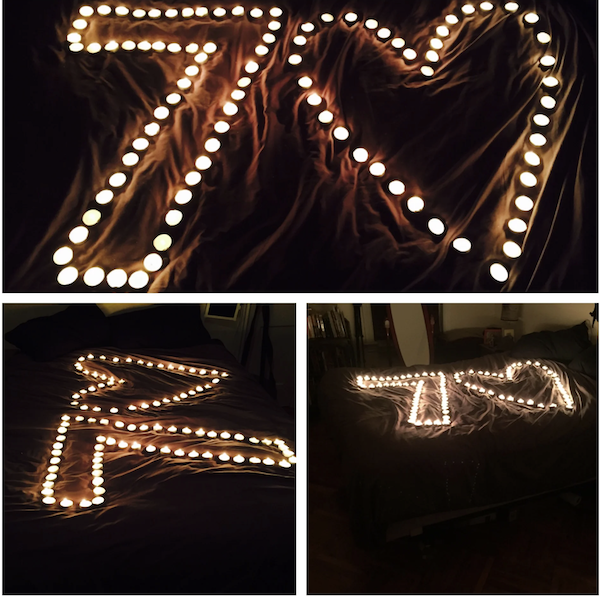
The scale of the reveal creates its own memorable atmosphere and ambiance. People don't remember the specific card necessarily, but they remember the feeling of walking into that candlelit room.
This works as a way to build up an otherwise standard card trick. But I think you really only get one of these moments per person you perform for. I used to think if their card appeared on a billboard one time, and then in skywriting another, then spelled out in seashells another, it could "feel" like three different types of tricks. But I think audiences are savvier than that. Unless you have a really compelling storyline that goes along with the reveal, I think they see them as similar effects.
Make It Permanent
Another direction to go in is to make your reveal permanent:
A tattoo
Etched in marble
Carved into a tree
The fact that the revelation is going to live on long after the trick has ended gives the trick more resonance.
This works fairly well to lend weight to a reveal. But it can feel sort of arbitrary on its own.
Ideally, the permanence has some purpose. Otherwise they’ll feel like, “Wait… why didn’t he just write that on an index card?”
Make It Personal
I've found that the more the spectator is integrated into the revelation, the stronger it is.
For example, turning over a matching card on the table is nowhere near as strong as revealing that they're sitting on a matching card.
Other examples where the spectator is "close" to the revelation in some way:
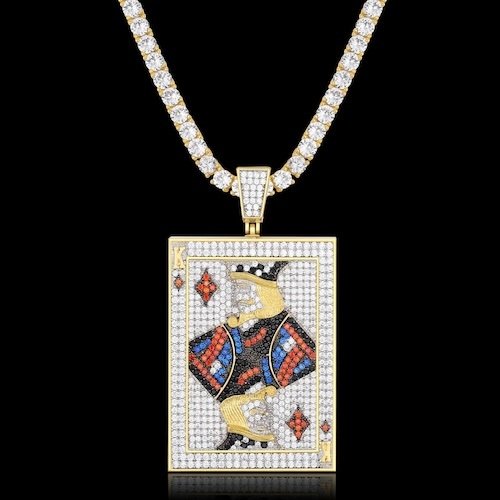
- You ask them to close their eyes while you put a necklace on them before the trick. At the end they pull the necklace out from behind their shirt and see that the pendant matches the card they selected.
- In Joshua Quinn's Penguin Live lecture he has the participant repeat a specific sentence, which he records on his phone. The spectator then selects a card. When the sentence they spoke earlier is played backwards, it reveals the card they selected.
- You tell them you'll teach them a trick but they have to take an oath not to tell anyone how it's done. You take a picture of them taking the oath.

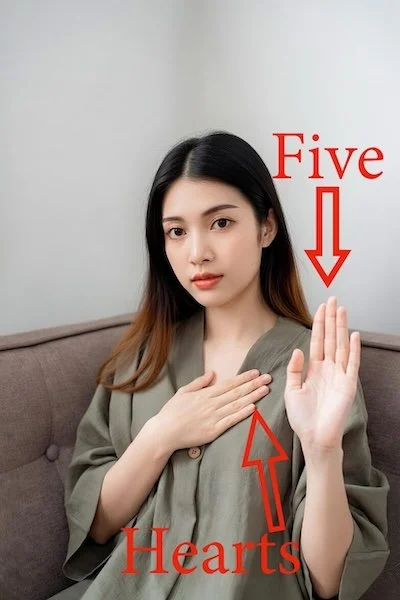
After that, they select a card, the 5 of Hearts, for example, without you seeing it. You "read their mind" and say they're thinking of the 5 of Hearts. "Want to know how I did it?" you ask. And you reveal they didn't freely select that card. They were drawn to it because you planted the seed, which they picked up on earlier in the interaction. And you draw their attention back to the photo.
People expect to be part of the selection of the card. Being part of the reveal of the card is unexpected and makes the whole thing feel a little more intimate and personal. Especially when compared to pulling out your Magician's Insurance Policy or something like that.
All of these techniques work to some degree. But my favorite approach, which gets the most affecting reactions is this:
Make It Old
When I can make the revelation feel like the culmination of something that began days, weeks, or years earlier—that's when I get the strongest reaction.
Examples:
- In my last book, I had a trick where the prediction was found in my old high school yearbook in the message left by this "weird kid" I went to school with. (That trick wasn't strictly a card force/revelation, but it's close enough.) Making the prediction something that is decades old gives a whole new feel to it.
- Get an old photo of you as a kid sitting at a table. Photoshop a playing card on the table and then get a hard copy version of the photo printed out and display it somewhere. You can now offer to show someone the first card trick you ever learned. They select any card and before they turn it over, you say, "I already know it's the 10 of Clubs." You then explain it's always the 10 of Clubs and bring their attention to an old framed photo of you on a bookshelf with you and the 10 of Clubs on the table in front of you.
- Sit down with your friend, chat a bit. At some point say, "I'm having the weirdest sense of deja vu." Shake it off. Have them shuffle and deal off some cards. "Wait," you say, "Did I already show this to you?" Your friend doesn't think so. "Huh, it's that weird deja vu again." They finally select a card, turn it over. It's the 4 of Diamonds. You look at it. Furrow your brow and say, "No way. I remember what it is now." You bring them back to your bedroom and dig in your nightstand. "Last year I was keeping a dream journal for a few months. I sort of gave up on it because it wasn't that interesting. But look…" You flip to an entry you made 14 months ago about a dream you had where your friend came over and they picked a card and it was the 4 of Diamonds.
You can leave some blank spaces and write in Frixion pen or erasable ink so you can re-use that entry for other friends. You can leave a blank for what they're wearing as well, which you fill in earlier in the night before you do the trick.
Old children's drawings, letters from deceased relatives, a voicemail or answering machine tape, doodles in a school notebook, inscriptions in a book, etc. Anything that feels like it's been around for a while could make a good "substrate" for a prediction that seems old.
With planning, you can do something that genuinely is old.
Whenever I'm visiting friends or family with very young kids, at some point I will secretly shoot a video with the kid where I spread a deck and have them take one. I'm talking about young children, as young as little infants who have to crawl to the cards. I'll say, "Okay, Timmy. What card is she going to choose?" In some manner the kid will identify a card. Either by picking one up or moving it or whatever.
I will then wait as long as possible to perform a trick for their parent. The longer you wait, the stronger it is. I've waited years to finally perform this. The longest I've waited is 14 years. I had my friend pick a card and I said, "And Tim [her son] is going to tell you what it is." I called Tim into the room. "What card did your mom pick?" Tim, who is in high school now, is like, "I have no clue." "You forgot?" I say. "Oh, come on. Well… you knew it at one point, dude." I shake my head. "Hmm… maybe I still have that video." I look through my phone. "Yup, here it is." Now I'm showing him and his mom a video of him in his playroom as a kid crawling up to a spread of cards, pulling out some and chewing on one. The same one his mom would pick years later.
You might say, "Well, the reason that got such a good reaction was because of the emotional element of seeing her child from all those years ago." Yes, of course that's true. That's a particularly personal usage of the technique.
But even with the less personal examples cited above, there’s something about the apparent weight of time behind a prediction that makes it more intriguing. Whether they fully believe the “age” of the prediction or not, it can make people feel as though they’ve been swept up in a story that was already in motion. And that’s a much more powerful place to land than, “Here’s something I just wrote down about that thing you just did.”