Sundry Drive No. 9

Congratulations to Joshua Jay and his lovely new wife, Anna, on their marriage yesterday. 

A photo posted by Amanda Kloots (@ackloots) on


I think Josh is one of the smartest, most talented, and most generous people in magic. I feel fortunate to have him as a fan, friend, and supporter of the stuff I've done online for 10 years. From what I know about his wife, which primarily comes from her delightful blog which she wrote about their travels during Josh's lecture tour last year, she is a sweet, smart, and charming woman. I have no doubt that this is just the beginning of a truly enchanted life together and I wish them both the absolute best.


It's rare for me to have a 100% genuine sentiment on this site, so I'm putting this block of text here to ease you into the rest of this blog post so you don't get whiplash from the shift in tone.


Alright, you fucking dodos, let's see what bullshit you're going on about at the Magic Cafe. Ah, look what's back on the front page of Latest and Greatest. You know how there's usually a "summer song" that blows up each year and kind of defines music for that summer? Well the Summer Thread over at the Magic Cafe is definitely the one on the Ellusionist trick "Change." It's got everything: chumps who bought a trick based solely on some of the most blatantly bullshit hype in magic advertising, sketchy product spokespeople who hype up the product and then vanish after its released, claims of false advertising, suckers who know they got swindled but can't admit it so they try and defend the product, people losing their shit over $30, and what looks like complete indifference on the part of the company who released the product. That's a good snapshot of magic marketing and consumerism as of the summer of 2015.

Okay, now I'm back in the flow.


One of my friends who helps out with the running of this site was talking to a woman the other day. They were talking about bad gigs she had picked up off of Craigslist.  She mentioned that she had once worked for a magician who needed silhouette's cut out of business cards and he paid her 20 cents per card. My friend asked if she remembered the name of this magician (so he could come running back to me, of course) and she said, "Yes. Oz Pearlman."

Oz, you magnificent son of a bitch! 20 cents? You're an animal! You couldn't swing a quarter?

You know how magicians always talk about what they'd do if the airline lost their luggage and they had to perform with whatever they could find or buy in the immediate vicinity? Well, Oz would just root around in the ashtray of his rental car to see if he could scrounge up enough change to have some locals hand-craft something quick for him to use on stage. 


Getting close!


Here's your one warning. That female magician you're sending the creepy and embarrassing PMs to on the Magic Cafe might just be me. So maybe don't be such a cretin when you're dealing with a woman there (hey, or anywhere, for that matter). Unless you want this to get blown up, Ashley Madison style. Put your dick back in your pants.

So, You're New Here

I've been meaning to have an introductory-esque post to put in the sidebar for a while now. New people are always discovering the site and the emails I get from them tend to ask the same sorts of things. So I'm posting this in an attempt to give an overview of what I'm going for here. In a few days I will move a link to the top of the sidebar for the sake of future visibility.

So, you're new here. 

Someone linked you to this site and told you it was great or that it was terrible, or you made some errant Google search, and now you're poking around trying to get a feel for it. Well, allow me to answer some of your questions.

Where should I start?

The beginning. It's all gold. 

Who are you?

Nobody you know.

Oh, cool... so you're like a well known magician but you want to be able to speak your mind without-

No, seriously, I'm nobody you know.

Who is this site aimed at?

It's not really "aimed" at anyone. I mean, obviously people who have some interest in magic, but other than that there is no real target audience. I'm not a professional performer and I write from the perspective of someone who performs primarily in casual situations for non-paying audiences. Thus, some of what I say won't be applicable to a restaurant performer who is performing the same tricks multiple times an evening for strangers.

But, on the other hand, a lot of what I have to say is relevant to anyone interested in magic regardless of where they perform and who they perform for.

Why should I listen to you?

Fuck if I know. Take a hike, I don't care.

The purpose of this site is not to convince you to like it. The purpose of the site is merely to be here for the people who do like it.

What do you mean by "audience-centric" magic?

It's the notion that the audience's experience should be the most important thing. Most magic, especially when it's presented by amateurs, is magician-centric. It's about getting people to be impressed by your abilities. We know this is true because the "story" of these effects is almost always, "Look at my impressive ability." I'm advocating that you structure your magic to be the most entertaining it can be and, whenever possible, to remove yourself from the equation as much as you can, and shine the spotlight on the experience itself.

You might be saying, "Well, screw that, the whole reason I got into magic was to get people to like me." Okay, that's understandable. But even if getting people to like you is your whole goal, trying to impress people with your skills is a misguided way of going about it. This is true in other areas of your life as well. If you want someone you meet at a bar to like you, you can try and impress them or you can show them a good time. The latter always works, the former will backfire as often as it will be successful. 

Do you really do these grand, drawn-out presentations? Don't you ever just do a normal quick trick?

Yes, I really do the presentations I write up. And yes, I do a ton of normal tricks too. But I don't have much to say about those types of presentations so there's really no need for me write about them.

Why are most of your presentations written up as a 1-on-1 situation?

Because that's how I prefer to perform. The best and most rewarding conversations and interactions I've had in my life have been 1-on-1. Performing that way allows you to tailor the moment specifically to that one person which creates more powerful moments. It feels very personal to them. Watch a Derren Brown special where he is performing for one person and compare their reaction to the reactions of the crowd for one of his stage shows. Both reactions are incredibly strong, but when it's just for one or two people, the reaction on an individual-level is much more intense. This almost goes without saying. Obviously the more people you're performing for, the more you're performing for an average of those people. That's why I prefer to perform 1-on-1. But I don't always. And I have many ideas for -- and love seeing --  a good stage or parlor magic performance.

What is MCJ?

MCJ refers to my old blog, The Magic Circle Jerk which I wrote from 2003 - 2005. Don't bother clicking that link. I poof'd the whole thing out of existence when I was done with it. You can find some remnants of it on the Internet Archive, but there are a few missing months that aren't to be found anywhere except on my computer. 

I'd like to debate a point with you.

Don't bother. I'm probably smarter than you and have already considered your point, and have argued it to myself better than you can, and I've dismissed it. 

No, but I think I have something you haven't considered.

Alright, cool, send me an email. I'm happy to hear it.

So you don't like mentalists/mentalism?

I like mentalism a lot, but it's a very needy branch of magic and that is a turn off for me (and for audiences a lot of the time as well). I'm constantly on the lookout for ways of presenting mentalism that don't feel like I want something in return from the audience (in the form of their esteem for what I've done). This is why a lot of my routines for mental effects involve something other than "my power" being responsible. I don't have it all figured out, but I definitely get a much better response the further I steer things away from the premise being, "I have this incredible power and now I'm going to demonstrate it for you," which is what 99.9% of mentalism is.

Why don't you like people who pretend magic is real or that their powers are real?

Well, first, in the context of a performance I don't have that much of an issue with it. I just usually think it's boring when presented that way. And I think an audience can be confused, wondering if you want them to actually believe you when you say you have this special power. That's alienating to people. Most people are more than happy to play along in a moment of interactive theater. But if they see what you're doing as any form of validation seeking (which is how it often comes across when you play it "real") they will push away and find you completely corny. 

And when you're performing for friends and family or people you'll see again, what's the plan for after the show? To continually keep up the ruse? No thanks. But if you come clean then it's like, "Okay, but if you were going to make up a story to entertain us, why not make up a more interesting one than, 'I can read the thought you wrote down on that piece of paper with my mind.'" And coming up with alternative presentations (presentations other than "look at this power I have") almost universally creates more original, more engaging, and more fun performances.

But you're removing the "magic" from magic.

No. I mean, look, the magic isn't there in the first place. You're not a warlock. You're faking it. I'm just recommending you fake it in a more entertaining way. I've performed the way you do. And I've gotten great reactions to things in that style. But the reactions to what I perform, and the interactions with the people I perform for, have been far stronger since adopting the performing style I advocate for on this site.

I genuinely believe in magic. More than you, I bet. More than most people. And by that I mean like the magic of the universe and of human interaction and fate and artistic experiences and a whole bunch of other cheesy sounding shit. I met my last serious girlfriend when she was wrestling with a bunch of bags and an umbrella on a rainy autumn evening in NYC. I offered to carry the bags she was lugging around if she would let me share her umbrella while we walked. She agreed and we ended up walking 30 city blocks together to her apartment (skipping the subway station we were originally bound for) and falling for each other along the way. In the time that followed that initial meeting we would always ask the questions: What if I hadn't left my office when I did? What if she hadn't gone Christmas shopping that night? What if she had stayed in the store a few moments longer? What if it hadn't been raining? What if I had an umbrella and hadn't been compelled to ask her to share hers? It seems like a miracle our paths ever crossed. Of course, you can play this game with almost any interaction, the shitty ones included. But when you play it with a relationship that is vibrant and satisfying then it gives that relationship a "magic" feeling, even when you know it's just a way of looking at the situation. One in a million coincidences are happening constantly, but that doesn't mean you can't choose to see the magic in them when they happen. That's all real magic is; a sense of appreciation and wonder for the good things in our lives and the recognition that they could just as easily have never happened in the first place. 

To think you're giving someone a truly "magical" experience by doing fake magic and pretending it's real is moronic. It's like catfishing someone so they can experience "true love." Or recording a voice and playing it over a loudspeaker and telling someone it's the voice of god so they can have a "spiritual" experience.

The ironic thing is, the magicians who want to be seen as real -- under the pretense of giving their spectators a "magical" experience -- often end up looking ridiculous and cause their spectators to disengage. Whereas a performance that seeks to entertain first can be a really compelling and transcendent piece of work, which in turn can be a magical experience for people.

How do I support the site?

For now, don't worry about it. If there are people you know who might enjoy it, send them a link. 

What Image Do You Project?

Professional magicians don't often have the money to invest in an image consultant. So when it comes to their "look" they are frequently flying blind. And "blind" may be almost too apt a word as many magicians look like the got dressed in the dark, while holding a stick in one hand and a dog on a leash in the other, and with a clothing budget equivalent to what one might make selling pencils from a tin cup.

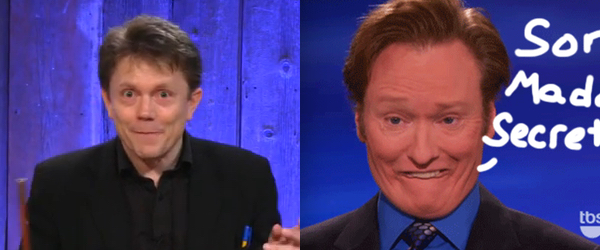
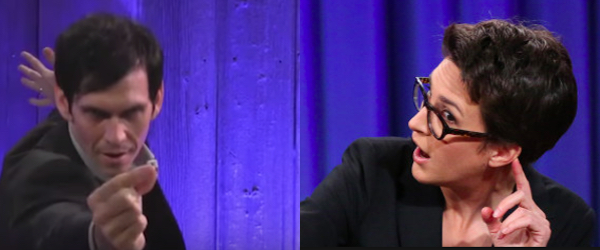
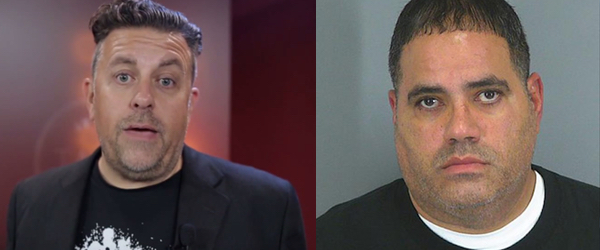
A lot of people think of me as "the most helpful guy in magic." I try to be humble, but that's pretty hard to argue with. I guess in keeping with that reputation I've decided to give back to some of my magic brethren to let them know how they are perceived by others. How did I do this? Well first I found an image of some luminaries in the magic world. I didn't use a posed photograph, I wanted to catch them in a candid moment, so I took a still from a video they appeared in on youtube. Then I took that picture and put it through Google's Reverse Image Search. What that does is it analyzes the picture and finds if there are any other versions of that picture online anywhere. Now, in these cases there wasn't because these weren't photographs originally, they were stills taken from a video. And when Google can't find a match it will provide you with "visually similar images." So now I'm just presenting these magicians with the suggested "visually similar images" so they can get a good sense of how they look to the world at large. This is all completely legitimate. I suggest you do a reverse image search on your own pictures to see what you look like to others. An image consultation like this would cost 1000s of dollars, and I'm only happy I can provide this outside perspective to some members of the fraternity as my gift to them.

So here, according to Google's Reverse Image Search, are some people who are "visually similar" to the image projected by some esteemed members of the magic community.


We'll start off simple. Here you can see how Tom Stone gives off a Conan O'Brien vibe.


Again, Google nails it. At this point I don't even know if it's Andi Gladwin who is ripping off Ariel Sharon's style or the other way around.


Who could deny that John Archer has a similar je ne sais quoi, to this heavyset woman waiting for her cruise ship?

JohnArcher.jpg

Joshua Jay will be married in a matter of days. Should something tragic happen and he ends up being taken out by a street-sweeper (for example), perhaps his lovely bride could take comfort in the "visually similar" arms of this kid who was charged with murder after tweeting "Come on a death ride with me," and then driving his car into a couple bicyclists while going 85 miles-per-hour on a busy California road. Both have a great head of hair and the same dead eyes.


How many times have you thought, "Is that Derek DelGaudio or Pakistani senior anchor person and investigative journalist for Dunya News, Kamra Khan?" 


Being "visually similar" does not mean you're at all similar behind the outer facade, as is proven here with the ultra-Conservative, bible-thumping, Trump-supporter, Rob Zabrecky and MSNBC's Rachel Maddow.


See, now to my untrained eye, I would say the look Max Maven is going for here is "sassy emo flight-attendant for Air Transylvania." But Google has pointed out that no, in fact, his look is a match for a stock image of the Greek god, Pan. I think that will please Max.


This one's a slam-dunk (see what I did there?). You can't look at Michael Weber without thinking "Larry Bird," (and vice versa). Look at those shoulders! Both have the silhouette of Herman Munster or a doorframe.


This one is complicated and goes to show you that you can't just judge these things with your eyes, you really need Google's sophisticated algorithm. "Fat Mark Elsdon" is visually similar to a skinnier, sexier Mark Elsdon look-a-like. While "Skinny Mark Elsdon" is visually similar to the mugshot of a fat guy who knowingly infected women with HIV or any number of black people.


And finally, can we stop calling John Lovick the biggest honky in magic, or #1 Cracker, or "whiter than sour cream"? As google so accurately suggests, he is pretty much the spitting image of Flo Rida.


I know what you came here to see
If you're a freak, then ya coming home with me
And I know what you came here to do
Now bust it open let me see you get low
                      
-- either John Lovick or Flo Rida (I forget which)

Dear Jerxy: Why Magic?

Dear Jerxy: You seem to talk a lot of shit about magicians, so why are you into magic?

Bring-It in Boise

Dear Bring-It: I don't think your question really makes any sense. That's like asking, "Hey, you claim to enjoy sex, so why don't you like rapists?"

I like magic a lot, but I don't always love the people it draws to it. I do think it's getting better. I think it's becoming a more open and inviting arena. It's still pretty homogenous, but it's definitely a little better. When I was a teenager going to my first magic conventions, they were 100% white, 100% male, and 95% over 40. In the early 2000s I saw a Sankey lecture here in NYC. I scanned the room looking for anyone who wasn't my father's age. There were maybe four people in my age range. Three of them were total fucking spazzes: matted hair, BO, wearing sweatpants and a dress-shirt stained with Arby's Horsey Sauce. I ended up hitting it off with the one normal guy, but honestly 90% of our conversations were just, "Can you believe this group?" 

I get the sense magic lectures and conventions aren't so much like that anymore (but I haven't been to one in so long, so who knows). I think this is in part due to the internet. By making magic not such a secret society I think it has encouraged more normal people to get involved. Back in the day I always felt like magic was 1/3rd lovers of the art, 1/3rd anti-social weirdos looking to have something over other people, and 1/3rd pedophiles who were like, "I hear little boys are into this hobby."

Here's what I like about magic:

The old guys. I was just complaining about old guys, but I do love the Dai Vernon figures in magic and the way they're revered. Even when they've lost their skills they are still respected and adored, and I think that's a great thing about magic.

The young women. In all honesty it's pretty embarrassing what a dong-fest magic is. Not only is it male-dominated but it's also often demeaning and dismissive of women who try and get involved (if not just completely creepy towards them). But I guess the one good part of being so backwards is that we get to enjoy the emergence of a feminine perspective in magic in the modern day. Sure, this is shit we should have been supporting and have sorted out 100 years ago. But we didn't. So when I see someone like Ekaterina Dobrokhotova bring a distinctly feminine charm and power to her performances, it feels like maybe it's more of a sea-change in the art than just a novelty. I still think we do a horrible job of supporting women in magic, and I think women often make the mistake of emulating the dull habits of their male counterparts. But I do see many women who are just getting too good to be ignored.

The History: I love the stories of magic. I mean, not the boring history that I assume they talk about at those magic history conventions. But like how 12 morons died doing the bullet catch! And magicians as spies, or saving lives from theater fires, busting psychics, stealing tricks, all that good stuff.

That most of you stink at it. Most of you are so terrible at performing magic for real people that I come off as super talented to them. Their expectations are so low. Everyone who, for example, plays violin in front of a crowd, is generally pretty good. You've got to be great to stand out as a violin player. But with magic you just have to be competent.

That deception can be an art form.

That it encompasses everything because it is essentially nothing. Magic doesn't exist. So when you learn magic you're not really learning magic. Instead you are learning dozens of other arts and crafts that allow you to present the illusion of magic. Whenever I talk to friends with kids and we talk about hobbies for the kids, I encourage them to get into magic. Magic is a great gateway to the world around you and it helps you identify your passions. Outsiders just think of it as sleight-of-hand. But I can't even begin to list all the areas I've had to explore in order to learn and present a particular trick, or magic in general. Writing, acting, comedy, electronics, memory and mnemonics, psychology, gambling, topology, cons, filmmaking, cold reading, juggling, crafting, dance, mime, mathematics, science, history, carpentry, theater, origami, sewing, forgery, animal training, drawing, optics, physical fitness, puzzle solving, and so on and so on. I love that "doing magic" might involve rubber cementing a bunch of shit together, or memorizing the most popular female names of the 20th century, or determining the sight-lines and angles of every seat in a theater so you can build a stage to vanish an elephant on. Other hobbies don't have that range. If your kid plays piano it's not like, "Oh, well sometimes she sits at the piano and plays with her fingers, and other times she uses different colored light rays to make you think you heard the song." 

Zach King

Zach King is a guy who posts videos on Vine. I also think he's one of the most successful magicians of our time. You can argue that it's not magic because of the techniques involved (a mixture of video edits (mostly just straight cuts) and practical effects) but that argument is a non-starter with me. In fact, knowing that's the method often makes it more amazing to me. You can also argue that it's not magic because everyone knows it's not real. Hey... I hate to break this to you, but everyone knows you're not real too. Yes, people know he's not real. The question you have to ask yourself is: Why does he have so many more fans/followers than the people doing similar videos in a more traditional "magic" style?

Zach has said his goal is to "inspire awe and wonder in people," and he does so through the means of deception. That, for me, is pretty much the definition of magic and why I consider him one of the most successful magicians of our time.

Here's a still-shot of Zach showing one of his videos to Rachel Smith of ABC news (don't go clicking on it, dum-dum, I said it was a still-shot).

That look on her face -- the combination of complete captivation and delight -- is, for me, the greatest reaction you can get with magic. And magic is one of the only art forms that can elicit such reactions regularly. But the problem with some magic, specifically all of mentalism, is that during the performance the magician is trying to garner credit or respect for this skill that most everyone knows he doesn't really have. And that pulls the rug out from under the "captivation and delight" moments because then the whole thing becomes a transaction rather than a gift (think of how joyless a Uri Geller performance is because it's supposed to be about him, not about the experience). The moment of magic in so many effects also becomes the moment of validation seeking, --"Look at my awesome power!" -- and the two just don't mix. It would be like going down on a woman, and in the midst of her orgasm putting your dick in her hand and being like, "Okay, now do me." You understand how that might undermine the moment? Ugh... why am I using sexual metaphors with you nerds. I wish I knew some Dungeons and Dragons or Legends of Zelda bullshit so I could reach you.

I think the reason for Zach's popularity (beyond that of traditional magicians doing similar things in the same medium) is, in part, because he doesn't ask for your belief. He's not asking for anything. He's just trying to give you a compelling, magical, moment. I think magicians could learn a lot from that.

I also think there is a powerful feedback loop to be exploited here. Zach has been inspired by a lot of traditional magic effects. I think we could, in turn, be inspired to replicate some of his videos in real life.

Hallmark

Effect

A card is torn in pieces and one piece is held by the spectator. The other pieces vanish. The restored card is now found in a sealed envelope.

Method

Yeah, I know, it doesn't sound like much, but there's more going on here than it might first appear. 

The first thing you need to do is take a duplicate card, tear a corner off the card, then put the playing card inside a birthday (or upcoming holiday) card and mail it to you friend. The next time you speak to them tell them you sent them something in the mail but that they shouldn't open it until you two get together this coming weekend (for example).

Put the torn corner somewhere where you won't lose it before the weekend.

My Baby, She Wrote Me A Letter

I've always liked the structure of a headline prediction where you mail it days ahead and ask someone to hold onto it for you. I wanted to incorporate that into a magic trick because I think it's inherently intriguing -- at least mildly intriguing. For a couple days your spectator will see the envelope sitting on their kitchen counter and wonder what that's going to be about. Anything that extends a trick out from the few moments it takes to perform is good in my book. Using the mail makes the effect bigger and test-conditions-y, in a way. Not only that, but receiving a card or letter in the mail is a less and less common phenomenon. So just the act of getting something interesting in the mail that isn't a bill or junk mail is a small treat for most people. 

On the day of your performance, bring a deck of cards and the torn corner to your friend's place. The torn corner should be in your left pocket.

Tell your friend, "I want to do something special for you, because it's your special day." Tell her to get the birthday card you sent.

Have her shuffle the deck in preparation for the Reverse Psychology Force. Force the duplicate of the card in the envelope on her. 

"You're sure that's the one you want?" you ask. "Okay. Great. Well... there you go. Now you've got your own personal card. And actually the 7 of hearts -- if you look into the meaning of playing cards and fortune telling-- the 7 of hearts means the coming year will be an extremely happy one for you." You look at the card. "I know it's not much of a gift, but it's unique to you, because you chose it. I mean, I guess I could have gone to the mall and gotten you some store-bought bullshit, but what kind of present would that be? This [you point to the card] is at least something unique and personal. Of course society will say it's not a great gift because it's just a playing card. Some people just don't understand what's really valuable in this day and age. Okay... see you later," you say and start walking out. You stop and turn back.

"Okay, I admit, it's kind of a weak gift. I'm sorry. Things have been pretty tight down at the Chevron station."

"You don't work at a Chevron station," your friend says.

"Well, I certainly won't be if things continue the way they're going." You point to the playing card. "I'm sorry. I should have gotten you more. Wait... I know what to do." You ask your friend to tear it into 8ths and give it back to you. When she does you toss all 8 pieces in the air. "Hooray!" you say. "Whew! A shower of confetti. What an amazing experience that must have been for you. I hope you enjoyed my gift. What better experience than to stand there as 1000s of pieces of confetti fall down all around you."

"8 pieces," she says.

"What an amazing moment that must have been. Confetti... it's nature's rainstorm."

"Wouldn't a regular rainstorm be nature's rainstorm?" she asks.

"We should clean this up," you say, and pick up the pieces. "Actually," you say, "I want to try something legitimately special for your birthday."

You now go into The Jerx Torn-Corner Handling.

The Jerx Torn-Corner Handling

I will describe this in the context of this trick but you can figure out how to use it with other tricks. I came across this method a few years ago and it's the only one I've used since. It's the simplest and most convincing vanish of the pieces as far as I'm concerned. And it's fun because the spectator essentially switches in the matching corner and assists in the vanish of the pieces. 

Here's how it's done. You ask your spectator to grab the birthday card for you. As she does you take the matching piece out of your left pocket and hold it in your curled left fingers at your side. All the other pieces are in your right hand at the base of your fingers in a relatively tidy little pile. When she goes to hand you the birthday card, you are going to do a shuttle pass action and pretend to place the pieces from your right hand into your left, but actually retain them in your right. You're holding back all the pieces in a clump like they're one object. Then with your palm down right-hand, and the pieces in Ramsay Subtlety, you will take the envelope from your friend. Simultaneously you will cup your left hand and jiggle it a little like you're trying to get the pieces to settle in some way. Your fingers should be slight spread so the piece that's in your hand can be seen. This piece is masquerading as all the torn pieces, so you don't want to show too much, but just a flash of it. Close your left hand into a fist, and place the envelope on top of your left fist. You put all your attention on your left hand and tell her to concentrate on it as your right hand ditches the pieces.

Now you act as if you changed your mind about how you want to proceed. You lift the envelope off of your left hand and tell the person to reach into your left fist and remove one of the pieces. You keep your left fist fairly tightly closed. Just loose enough for her to barely reach in. You say, "If you get more than one piece, just put the others back." Of course, they can't get more than one piece. There's only one piece to get. And as they remove this one piece as a "receipt" they have just switched in your torn corner, removed the only trace of a card, and reinforced the idea that the hand is full of pieces. 

Look at this vanish from the spectator's perspective. The shuttle pass is a very natural action which is immediately reinforced when they see an empty right hand, and apparently pieces of card in your left hand. At this point suspicion should be low to non-existent. They then clean up the situation for you when they remove the piece from your hand. Only after that do the pieces vanish. In this case I would place the envelope back on top of my left fist, then with my right hand I would press down on it as I opened my left hand, so the envelope was sandwich between my palms, as if I was pushing the pieces into it. 

I would then hand them the envelope to open and find -- inside a birthday card -- their "freely" chosen card restored except for their "freely" chosen piece.


Follow-Up: Reverse Psychology Force

I received a number of emails about the Reverse Psychology Force. Half of them were hyped-up and super complimentary about the idea. The other half didn't get it. 

The half that loved it included some magicians whose work I really admire. So that reinforced the notion that I was on to something with the idea.

The half that didn't get it were a bunch of nobodies. So what do I care what they think? No, but I did receive some emails that said things like, "What's the big deal? You force a card and ask someone if they want to change their mind? How is that new?"

Which makes me think I didn't quite explain well enough the moment in the force that makes it so powerful. The moment which makes it, honestly, more powerful than any force I could do even with a gimmicked deck. 

If you haven't read the original post, scroll down a few day, you'll find it. The rest of this post assumes you're familiar with it.

So, you get to the moment in the force where the spectator is looking at the force card and you ask them if they like the card they have or if they want to start over and get a new card. How does this differ from just doing the classic force and then asking them if they want to change their mind? It differs in subtle but big ways.

The multiple, legitimate, free choices during the face down selection of the card
+
The psychological force card
+
The length of the selection procedure
=
The absolute illusion to the spectator that they are making a genuine decision to keep this card over any other one in the deck

Like many of you, I used to do the thing where I'd force a card on someone and then say, "And you're happy with that card? Okay so we'll take your card..." Where you kind of pretend to give them the option to change, but really you're just rushing them along and not even giving them any time to consider changing out of fear they'll say, "Yes, I want to pick a different card." With the Reverse Psychology Force there is no rushing. In fact, not only is there no rushing, you must slow everything down at the point you ask them. You are giving them the option to change and not ushering them on to something else, but letting them sit with the decision. So it feels for all the world like a genuine choice. It is a genuine choice but it's structured so they'll never take it. And it's this moment -- this moment where you slow down the process to wait for their final choice of a card after they've seen the face of the force card -- that can't be replicated in any other force. I mean, you can replicate it, but in that case you're just hoping to be lucky. This force doesn't require luck. The Reverse Psychology Force is like a three-legged stool. In a spectator's mind, in that moment of decision, they're thinking (at least on a subconscious level):

  1. I've already made multiple free choices during this selection
  2. I like this card I've selected
  3. I don't want to "start over" because this process takes a bit of time and I want to get on with it

It tics all three of those boxes. And it's all those together that makes the result of their "free choice" always, "I'll keep this card."  That's what I feel makes it the strongest force there is. The opposite of a force, is a free choice. And this is the only force I know of where the biggest free choice is apparently made after the force card is known. It's 100% disarming.

I wish I was able to express to everyone how much stronger this has made my tricks that involve a card revelation. It really allows me to do anything. And after any reveal you want, you get to backtrack to that moment. "You shuffled. You selected any card. And you even had the choice to change your mind after you picked this card." It's unexplainable to people.

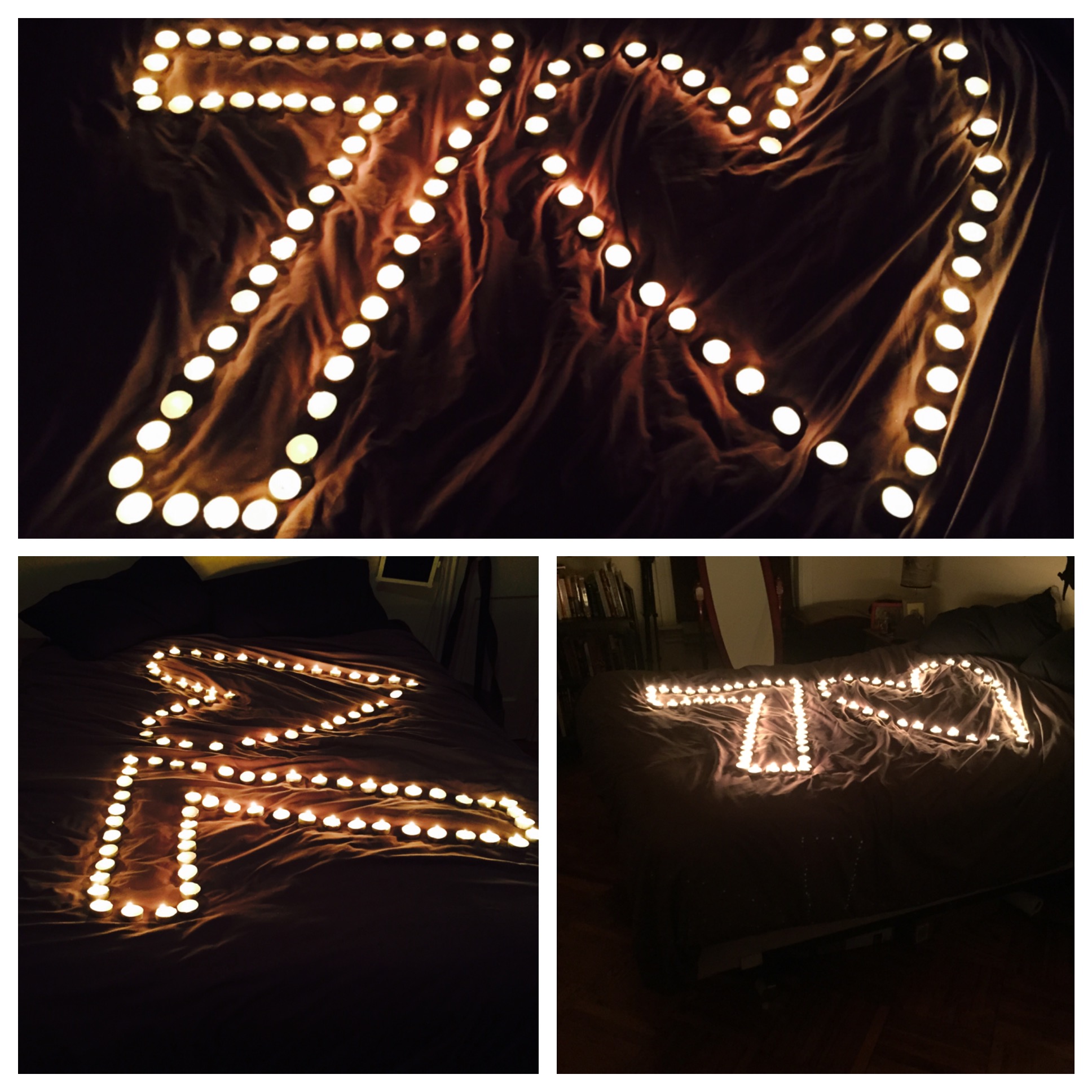
This weekend I performed it with 100 tea-light candles in my bedroom indicating the card. I have french doors between my living room and bedroom and I had black-out shades on the bedroom side of the doors, so at night, when you looked through the door's windows into the bedroom it looked like a completely dark room. I performed this force on my friend in my living room, had her look into my bedroom, we walked over to the doors of my bedroom, I pushed them inward and it was almost like the room was painted with light as the doors swept open. It was essentially a black-art principle and looked very magical. (Although I wasn't trying to imply that the candles "magically appeared," or anything. It was just a neat looking effect in the moment.) And there was her card, the one she had just "freely" decided to keep.

And yes, I'm an idiot, and I left 100 candles burning on my bed unsupervised leading up to the performance of this trick.