Monday Mailbag #44

Yo, yo. It’s great to be back. I had a nice break and I’m re-energized and ready to kick off this post(ish)-Covid, return of the roaring twenties, white boy summer.

Things here in the northeast U.S. are “more normal than not” almost everywhere. And even though we’re not completely out of the woods quite yet, I’ve found people to be considerably more sociable than they were at any time I can remember. If you’ve been wanting to engage in more social performing, here is your opportunity. Not only are people more open to it, but you have an ideal lead-in as you discuss what kept you occupied over the past year+. “I kind of went back and picked up a lot of hobbies I had been involved in as a kid… origami, magic, juggling…” or, “I ended up getting really interested in reading up on these obscure psychological phenomena,” or, “I started looking into how to read tarot cards, but ended up going down all these weird rabbit holes into other forms of divination and rituals. It’s really sort of fascinating and some of the stuff is weirdly unexplainable.” Or whatever your presentation might be.

Okay, let’s get to your letters…
giphy.gif

Oh, Great Jerxy, your wisdom is needed on this Magic Cafe thread. It’s for a trick called Stamp by Joe Deng. A silver ball is placed into a little brass cup and smooshed down and it becomes a quarter. The thread has erupted because some people are concerned that the brass contraption that supposedly “stamps” the coin should have the imprint of heads and tails side backwards or else the trick makes no sense. You couldn’t print a coin from a stamp that looked like this

462EAC06-9BA9-41EB-AE99-CB15CF3B6BC6_480x480.jpeg
8B89598B-94D2-4076-9EE3-3B3D7B97851C_480x480.jpeg
A14C23FD-DEFE-49B8-8A2D-6E1A1631BF3E_480x480.jpeg

That would print a backwards coin.

Nate Kranzo comes to the thread and doesn’t do himself any favors by pitching a fit because people are pointing out this inconsistency.

What do you think? Will people notice? Will they care? Is it worth a purchase? Is there a presentation that covers the issue? —FE

First, I agree that Nate doesn’t come off great in this thread. The issue is legitimate and saying, “Put it away and go on to the next trick,” is not really an answer. The nature of the trick is that you’re asking people to show some interest in the prop and what it does. Having to whisk it away at the end is completely incompatible with that type of interaction, which of course will raise suspicion in some people.

If Nate had said, “We did it this way on purpose” and gave a reason, or, “Yeah it was a mistake, we screwed up. But here’s why we don’t think it’s a dealbreaker…,” he could have put the issue to bed, at least to some extent. Flipping out over people pointing out the problem just comes off as defensive and puts more focus on the issue than there would be otherwise.

But it’s also understandable. I’m sure he’s got boxes full of these things to sell. And if you put the time and money into putting out a trick and the first thing that happens is people start pointing out a flaw with it, that’s got to be a huge bummer.

Getting to your questions:

Will people notice? Yes. Especially if they have the quarter and the stamp in their hand at the same time. It will be clear that stamp couldn’t make that quarter (not only is it backwards, but it’s embossed when it should be debossed). So I would try to have them look at the items individually. Some people will still see the problem, but certainly less than if they’re looked at together.

Will they care? I don’t know if “care” is the right word. But it’s not a non-issue.

Is it worth a purchase? I actually think it is. I will probably get one despite the flaw.

And that’s because—while the orientation of the imagery is a discrepancy—with the right presentation, it doesn’t need to be a discrepancy that spoils the trick.

Now, look, if your presentation was, “I have super human strength, and I’m going to squash this silver ball into a quarter with this device,” then yes, the reversed quarter would be an issue because it completely undermines that presentation.

And just saying, “I’m a magician, so it doesn’t have to make sense!” is a pretty bad way to handle it too. Sure, it ends the conversation, but It’s also completely unsatisfying for the audience. If someone asks why something is the way it is, and your justification is “because I’m a magician,” it might as well be, "because fuck you, that’s why.” And I hate to break it to you, but bringing out a little brass gimmick to smoosh a ball doesn’t exactly scream, “I’m a magician!” It screams, “I went to the magic store!”

The easy way to handle all of this is just to take your “powers” (physical or magical) out of the equation altogether.

For example, I might say, “Check this out. It’s a reproduction of an early 20th century counterfeiting machine I picked up at a flea market the other week. I never heard of such a thing, but the guy who showed me how to operate it. You drop a ball bearing in here. Then just by pressing down on it you can make a quarter. Look, you don’t even have to press hard. Just gentle pressure. Isn’t that crazy? I don’t really quite understand how it works. These days, it doesn’t make financial sense to use it because quarters are worth so little and you have to buy the ball bearing. But apparently 100 years ago you could make a lot of money doing it.”

Now, let’s say my spectator says, “That didn’t print the coin. It would be backwards if it did.”

Then I would just act low-key confused and look at the trick and mutter. “Huh… wait… yeah you’re right! But that means… what does it mean? The ball just… disappeared? And was replaced with a quarter somewhere? That can’t be. Well…. shit… now I really don’t get how this works.”

If you introduce the gimmick as an unusual object you’ve come across, then the discrepancy doesn’t have to undermine the experience. You can actually use the discrepancy to make the trick more mysterious, if you play it right.


With the world opening back up I was thinking of taking an acting class to help improve my presentations. Do you think that’s a good use of my time/money or would you recommend something else? —GC

Hmmm… I feel like if you have a latent acting talent, just waiting to be released, then taking an acting class might be good for you and your performances. But if you don’t have that natural ability and you just think taking a couple acting classes will be good for your magic, I doubt that’s the case. I think it would likely just put you up in your head and cause you to be less present than you would be normally. In a close-up, casual magic setting, the ability to be you and to be present is the most important thing. Acting is playing a role. When I engage in even the most fantastical types of presentations I do, I don’t think of myself as “playing a role.” I just think of myself as lying. But it’s not in a malicious way because everyone knows I’m lying.

I would recommend an improv class rather than an acting class. Improv focuses on getting out of your head and being in the moment and not over-thinking your instincts. I’m sure you get some of that in acting classes too, but it seems like it would be less fun.


Have you ever stopped yourself from posting something because you were worried it would hurt someone’s feelings? Or do you have any stories about posts that you intended to publish but then thought better of and decided not to? —BR

My initial thought was: “No. There’s nothing like that.” But I’m sure I’m wrong about that. There are likely posts I wrote up but never hit the publish button on and ended up deleting. But I don’t have any memory of them because it’s the sort of thing I’d forget about immediately. (There are 1200 posts on this site, I don’t really remember the stuff that didn’t make it to the site.)

In fact, I can say with certainty there is at least one post I wrote up that I thought better of publishing. But the only reason I remember it is because it happened just a couple of weeks ago.

The new issue of Genii came out with this cover:

Screen Shot 2021-06-07 at 12.49.42 AM.png

I had written something for one of the Friday posts that was an email, purportedly from Joshua Jay, expressing that he was furious about the new cover of Genii magazine. At first it sounded like he was upset that Genii was glorifying this nazi magician. But then the twist was that he was mad at Richard Kaufman for stealing the design of his upcoming book and the performance identity that he was trying to establish for himself: Hitler’s Magician.

I decided against publishing it not for Josh’s sake, but just to spare myself emails from people who don’t quite understand how jokes work who want to lecture me about comedy. I can usually count on one or two of those any time something I write about touches on a taboo subject. And at the time I wasn’t feeling in the mood to deal with that.

Dustings #39

Hey boys,

I’m taking next week off for a late spring break. Regular posting will resume on June 7th.

Jerx Hot Tip: If you’re looking for some more online magic content while I’m away, go to the site “google.com” and put the word “magic” in the search bar. You will get dozens of results.


From an email I received:

I found this lying on the sidewalk yesterday when I was out walking my dog. It's really weird, like some kind of experimental shield thing.

Coral Mask (1).jpg

Actually, it's just a simple presentational construct for a Lubor's Lens but it fits me nicely. —DK

That’s great. The Reality Twister/Lubor’s Lens thing was pretty underappreciated in my opinion.

Here’s a Magic Cafe thread of a bunch of people not getting it.

“It’s just an optical illusion!” they say. Yeah, no shit. That was the point. The point was that you would use this weird lens thing to make objects distort or vanish when viewed through the lens. And just when people are thinking, “That’s an interesting optical illusion,” you do something with it that seems to actually affect some object in the real world.

The misunderstanding was that it was the optical illusion part by itself that was supposed to be amazing.

Another dumb thing people did with this was even done in the ad for the effect:

Your friend holds a pen on her open palm as you hold a clear "Credit Card Protector" just above the pen.

Why call it a “credit card protector”?

Because, Andy, magic with everyday objects is stronger.

Okay, sure. And how exactly is a clear “credit card protector” an everyday object?

Magicians get so caught up in the “everyday object” concern they think they can just make something an everyday object by claiming it is. That’s not how it works.

Not only that, but it’s a dead end presentationally.

“Behold the magic I create when you look through my credit card protector!”

The simple alternative is just to say. “Look at this thing I found. I have no idea what it is, but check out this strange thing it does.” That’s a perfectly fine default presentation: The object is a mystery and it does something impossible. Sometimes that’s all you need.

DK’s idea above of tossing it in an envelope and adding some obscure labeling to it in order to enhance that presentation is quite a good one.


Some say I’m responsible for both Penguin and Vanishing Inc having better shipping deals becausewithin weeks of me suggesting it in this post, Vanishing Inc came out with their VI+ program that offered free shipping with no minimums, and soon after that, Penguin started offering the same thing. Was it the Invisible Hand Of The Jerx that puppeteered these titans in the online magic industry? Perhaps.

So now I’m proposing another benefit one of the major magic companies should offer…

There’s nothing quite like buying an expensive book or trick and then three weeks later seeing it for 40% off. If there was a company that offered some sort of “purchase protection” where they would give you credit for the difference between what you paid and the sale price (within a certain amount of time, not eternally) they would have my business. And this would be something that is not just good for the customer. It would be good for the company that adopted this policy as well because it’s a policy that would be especially attractive to people making high-dollar purchases.


Through A Layman’s Eyes

I encourage my friends to not let me get away with stuff in a magic context. I want them to “go along” with the presentation, but I don’t want them to “go along” with the process of the trick if they think there’s something suspicious or questionable going on. I want to be able to sand off those suspicious or questionable moments, and I can’t necessarily spot them without their help. So I encourage people I know to call me out on stuff. This doesn’t always go so well when I introduce another person who does magic to my unforgiving friends.

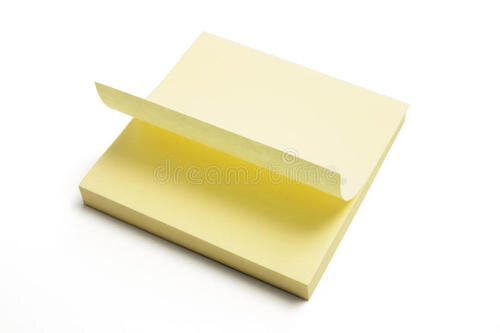
A couple years ago one of my friends who does magic was performing for some of my non-magic friends. I forget what the exact trick was but it involved a Svengali-style pad that was made to look like a pad of Post-It notes.

post-note-pad-11053369.jpeg

When it was over, one of the people he was performing for said, “It’s a trick pad.”

Are my friends assholes? Well, no. I mean, some of them are, but that’s not what was happening here. They’ve seen me perform a bunch and I’ve asked them to be critical. I tell them it helps me. So that’s what they were used to.

When I asked my friend why he thought it was a trick pad, his girlfriend chimed in and said something like: “Because that’s not how you use Post-Its. That’s not the sort of pad you write on every page. He probably needs the pages to stick together for the trick or something, so he used post-its.”

Now, she was wrong about the method. But that’s not what matters. Their point still stands. You don’t use a Post-It pad to write on every page. You write on a page, pull it off and stick it on something or throw it out.

“That’s not true, Andy. I knew a guy, and every morning he would take his first bowel movement and microwave it and record how long it took to melt and he kept that information on a Post-It pad, and he never pulled the pages off and he kept all the pads like that until the day he set himself on fire.”

Okay, I get it. I’m not saying no human in history has ever used a post-it pad in that way. I’m saying it would be unusual. And in magic you want to limit the unusual things. Especially unnecessary unusual things.

It’s already somewhat unusual to ask someone to think of something from a pad (rather than from their head). Unless you can justify the pad, of course. And you would justify a pad by using it in a normal, human way. “I’ve been practicing my drawing and doing a daily sketch.” “I’ve been writing down a highlight of each day to try and be more present.” “I found this notebook my dad kept of the women he banged. It has their names, measurements, physical attributes, and rates them on scale of 1-10. Notice they’re all different. I want you to think of one of these women and I want to see if I can pick up on a psychic thought of my dad fucking them…. Okay… yes, I’m seeing a large breasted woman…red hair….” Etc. Etc.

It would be very difficult to make pulling out a pre-filled post-it pad feel natural. It would feel solely like a prop for a trick.

And there’s no reason to use the post-it version when they make perfectly good Svengali pads that are like the little spiral notebooks people do actually carry.

“But my pocket space!”

Ah yes, the true concern of the magical artiste. Okay, fine. If your primary concern is how much junk you can fit in your pocket, go with the post it notes.


Chris L. writes:

Just wanted to share this with you. Google has a morse code trainer that is spectacular.

https://morse.withgoogle.com/learn/

In literally ten minutes you can learn the full alphabet, just from using this website and installing the morse code keyboard on your phone. It might be a useful tool for people who fear that it might be too difficult to learn.

It’s a really good program. I didn’t bother downloading it on my phone, but I played around with the online version and it’s definitely one of the easier ways I’ve seen to learn Morse code. Thanks, Chris.


Okay, see you back here on June 7th.

Until then, I hope your next week is pure…


Portrait

Portrait by Stasia Burrington

Portrait by Stasia Burrington

This is one of my favorite two person code effects. Not solely based on the strength of the effect. But because it’s kind of equally fun for everyone involved: the sender, the receiver, and the people watching. It’s silly but can be very baffling as well.

You won’t like the method but… tough shit.

Imagine

I’m with my friends Charles and Juliana. (They’re not a couple, just friends.)

“Charles, have you shown her that thing you’re doing with the portraits?”

Charles demurs. “Oh, nah. It’s not that interesting.”

“It is!” I say. “You have to see this,” I tell Juliana. “He draws these portraits that are just so unbelievably rich and realistic, that you can sense so much about the subjects that you seemingly shouldn’t be able to know. It’s freaky. You should show her.”

We get some paper and a marker.

“Think of any profession,” I say to Juliana, “and he’ll draw the face of someone in that profession. It’s uncanny.” I step away from the table. “Actually, I don’t want to know what he’s going to draw. I want the experience of it dawning on me when I see it. So you two figure it out.”

I take a couple more steps and turn my back to them. Charles has Juliana whisper the name of a profession in his ear. From this point on he never says anything, he just starts to draw. As he draws, I tell Juliana to tell me when he’s done.

He takes his time. Pausing as he goes to make sure the image is coming together perfectly. After a few moments she clues me in that he is done. I turn to the two of them and Charles shows me this stunningly detailed portrait.

IMG_7350.JPG

“Ah! The quintessential portrait of a lawyer!” I say, the moment I see the drawing.

Charles takes a small bow. “Do you want to see it again?” he asks Juliana. She says she does. I turn back around.

Charles gets another profession and draws this portrait.

IMG_7349.JPG

When he’s done I turn around.

“Oh wow,” I say, impressed. “Uhm… that’s not some kind of doctor is it?” Juliana shakes her head.

“It’s strange. Because there’s something about the eyes that says he does something with the human body and deals with injuries or something like that. Oh wait! I see what it is. I didn’t pay enough attention to that smile of his. He works with his body, and the injuries are his own. He’s a football player!”

At this point, Juliana is truly losing it. She’s trying to figure out what’s really going on.

“Wait,” I say, “Can you really not see the knowledge of the law expressed in this man’s features? Or the abuse the body has taken reflected in the eyes of this picture?”

Given that the pictures are pretty much identical and look like they were drawn by a 6-year-old, no, she can’t quite discern these details.

She suggests Charles must be doing something in the image to signal what the profession is. Maybe writing something in the hair? I tell her to look closely, there’s nothing there. I point out that I’m across the room. How could I see anything even if it was there?

Charles suggests that we do it again. He’ll draw the image but they won’t show it to me. Instead Juliana will draw her own copy of Charles’ drawing. So she knows there’s nothing secretly hidden in the drawing.

We go through this process. Juliana shows me her drawing. “It’s a baker,” I say. It is.

Now Juliana wants me out of the room when the drawing is being made. I go down the hall into the bathroom while Charles draws. When I come back there is a new drawing on the table. I sit down and examine it.

“Let’s see. Hmm… this is a little more nuanced. Is it a mechanic? Or someone who does something with cars?”

It’s a mechanic.

For one final test I go into the other room. Juliana whispers (just to be safe) a profession to Charles. He draws a portrait. She copies the portrait and brings it to me in the bathroom. I open the door. I take her drawing of Charles’ drawing, of a completely nondescript person, that is identical to all the other drawings they’ve already done. I look at it for a moment. “This guy is stressed,” I say. “Look at the anxiety in those eyes…He’s an airline pilot.”

He is.

A few weeks later the three of us are meeting up for coffee. I take a look at a book Charles is reading and a business card sized bookmark falls out of the book. Drawn on it is another one of those portraits. I notice the image. “C’mon, Jules. You can do it. What is this person’s profession?”

IMG_7352.JPG

“Oh, it’s obvious,” she plays along. “He’s a carpenter.”

“Hey! How about that! She got it. The ears give it away. See? I told you there was no trick to it,” I say.

I slide the bookmark to Charles. He takes it and passes it across to Juliana. “You keep it,” he says. “It’s my gift to you. Hold onto it. There’s actually been a bit of a buzz about my portraits in the art world recently. It will be worth some money some day.”

She picks up the card. Looks again at the picture. “I’ll cherish it,” she says.

As she goes to put the card in her purse she notices something written on the back…

IMG_7353.JPG

Method

Here is the image of the lawyer being drawn. If you want to try and figure out what’s going on, don’t scroll any further. Watch the video before reading the rest of the post.

The secret?

It’s Morse code.

The receiver listens for the sound of a long line, which is the sender drawing the outside of the face. After they hear that line, they know to pay attention. The morse code is done while scribbling the hair.

There’s no need to do the full word, just enough letters to give the other person the idea of what it is. For “lawyer,” my friend just had to code L-A-W.

So “L A W” in morse code is:

L = ⚫⚫⚫

A = ⚫

W = ⚫ — —

For the sake of this demonstration video, I had my friend use a fat black marker to exaggerate the sound. You don’t need to. A sharpie works fine.

Go back to the video and just listen to the sound once the marker starts to draw the hair. Don’t pay attention to the lines the marker is drawing, just listen to the sound.

You’ll hear:

short, long, short. short

pause

short, long

pause

short, long, long

You might think, “I’d never be able to hear that!” But once you become familiar with Morse code, it’s very easy to pick up on these differentiations. And when drawing, the person can make the “long” sounds very long, which means the short sounds don’t have to just be taps. The general rule we use is that if it sounds like it could be a single line it’s a dot, if it sounds like multiple lines back and forth it’s a dash.

So now I’ll walk you through the the beats of the trick above, because we sort of switched it up as we went.

First Phase -

Charles sent the letters L-A-W. I knew that would be “lawyer.”

Second Phase -

Charles sent the letters F-O-O-T. Now, ideally we want to send letters that signal the actual name of the profession. But in practice we found that sometimes it was easier to send the letters that spelled what they worked with. So when I got “FOOT” I had three immediate thoughts:

  • Football player

  • Podiatrist

  • Shoe salesman

I discounted the last one, because I figured he would have sent SHOE for that, which would have made me say “shoe salesman” or “shoe designer” or something like that. And I probably could have eliminated “podiatrist” as well, as he would likely have sent PODI for that. (If he just sent POD I probably would have said “podcaster.”)

But with both podiatrist and football player in my head, I did a little fishing. While it can be hard to fish between the Four of Clubs and the Queen of Diamonds in a way that seems innocent, I have complete confidence in myself that I can dance my way between any two different professions and find some connection between the two.

Third Phase - Charles sent BAK. He probably should have gone ahead and sent BAKE, as that would have been completely obvious. But after a few seconds thought, I figured that BAK is Baker.

Fourth Phase - I left the room and when I came back I sat at the table with them both. As we sat together there, Charles tapped MECH on my foot. “Mechanic.”

Fifth Phase - This was just a real cheat. As Juliana brought me her copy of the drawing, Charles quickly texted me what it was. Isolated from the other phases, this might have been an obvious conclusion for her to jump to. But I think laypeople are less likely to assume you’re using multiple methods. So since she knew he wasn’t texting me anything in the previous phases, I think it didn’t jump out as an obvious solution in this phase.

The bathroom was far enough away from where we were hanging out that he had the few seconds he needed to text “pilot.” But just to be sure, I had locked the door. If she had showed up before I got the text and put away my phone, I was going to wait for the text, then flush the toilet, as if I had just taken the opportunity to take a leak while I was waiting. So there was no chance of her coming in before I got the text.

We had worked out a bunch of possible contingencies in regards to how he would signal the letters or the word to me beforehand. Charles is one of my friends from back in NYC, so we have been doing this sort of thing together for years and can usually improvise our way around any possible challenge. We also both use sign language, so I knew I could get the letters by surreptitiously looking at the way his hand was resting on his leg, if it came to that. And we had another way of transmitting the Morse code where a picture frame in the hallway reflected the a mirror in the dining room, which reflected the living room. So one of us could flash our camera’s flashlight in the living room and the other could get the signal three rooms away with two walls between us.

Sixth Phase - This used another technique I use frequently with a wingman: lap-writing. Charles had two business-card sized pieces of blank card. Each with an identical face on it (similar to the face he drew for all the other phases). And his signature and the year 2021 on the back. One of these cards was in his lap, the other was in his book. I took that card and showed it to Juliana and asked her what the profession was. When she named a profession, I spent a few seconds congratulating her and pointing out the subtle signs she picked up on. As I did this, Charles wrote that profession on the back of the card in his lap as if it was the title of the picture. There was no rush. It’s one word. And she was distracted.

I slid the card we’d been looking at over to Charles, he pulled it towards him, lapping it, and in the same motion brought out the other card. This sort of switch can be pretty much invisible even if someone is paying attention. And in this case there was no reason to be paying attention to that moment, so it completely flew by.

That’s it. While learning Morse code and working with a partner is a lot of work for one effect. These are things that I consider part of my “toolbox” for creating effects. So I don’t look at them as being part of one effect, but a useful building block for many.

Learning Morse code and practicing signaling the information back and forth should be an enjoyable process. So don’t pick someone you have to drag into this because it does take some effort. You can be competent enough in Morse code to do tricks with it—starting from no knowledge—in about an evening. There are online trainers you can find for Morse code, but the truth is that’s all kind of overkill for the purposes of magic. You just need to know the letters and symbols, you don’t need to know them with any speed. Even the slowest speed you see on those trainers is much faster than you ever need to use the information in performance.

But again, learning this stuff should be fun. If the idea of ordering some pizza and inviting your magician friend or wingman over and working on this stuff doesn’t seem like an enjoyable way to spend a few hours, then of course it would be stupid to spend your time doing so. But if you are into it, and you find someone else who is intrigued by the process of learning and practicing this type of thing, then definitely put the time in to learn some two-person coding. I find Morse code to be the best because it’s the most useful. You can signal Morse code through any sense: touch, hearing, sight… you could even do it with taste or smell, theoretically. But even if you just learn some simple party-stunt type coding tricks, I think you’ll still enjoy yourself. Appreciating the deviousness of a magic method is usually a solo pursuit. It’s nice to be able share that with someone.

Monday Mailbag #43

giphy.gif

Your six year anniversary is coming up [Note: It’s today, actually.] Congratulations. I’ve been reading from the beginning. You may not remember, but I wrote you in June of 2015 saying I was shocked and impressed by your ability to write consistently for a full month. And now it’s six years later and you’ve added newsletters and books to your output and yet I’m less surprised that you’ve maintained your publishing schedule these days than I was back then. So that shows you what consistency gets you.

In all seriousness though, thanks for keeping the site going as long as you have. You’ve become a fixture in my magic world and I appreciate knowing the site is here, especially as an escape from other things in life that are frustrating or depressing. We all need those things that are just purely positive, and that’s what your site is for me and many others I’m sure. —SD

Okay, normally I don’t post positive emails about me or the site, but I’m posting this one as a stand-in for the other kind emails I’ve received about this site’s anniversary (and the ones that typically come this time of year). Thanks for the nice words. I’m glad people are still enjoying the site.


There is a big report coming out next month that will confirm the existence of UFO's.

I wonder if this could be a new context that magicians can make use of?

Instead of claiming magic powers - or being experts in psychology - we can claim to be... aliens. —JM

I don’t know how seriously you intended this suggestion, but I for one would definitely be intrigued by seeing someone who claimed to have powers because of having an alien ancestry. I’d certainly rather see that than another person who is an expert in “psychology and persuasion.”

Although it wouldn’t work that well for the amateur.

For the amateur performer, these all have the same issue:

“I have magic powers.”

“I’m an expert in psychology.”

“I’m an alien.”

They are all proclamations about the performer. So all the tricks become “performer-centric.” And because the amateur is generally performing for friends and family, he is performing for people who know none of these things are true. So the first thing he’s asking them to do is treat him like a character, not as the person they know and (hopefully) love. I find that to be a fairly off-putting way to present magic.

I’ve found people to be incredibly comfortable with the idea that the story and the situation you’re spinning is a work of fiction… so long as they know that you’re you and your relationship with the person is your relationship with the person.

It’s when the fiction extends to you playing a “character” in a social situation that it can become unsettling and/or pathetic.

That’s why my identity as a performer is essentially: “someone who is interested in magic and the mind and strange things.” It’s just an interest I have, and I get to share these things with people, and it’s not all about me. There is usually some sort of fictional element to what’s going on, but that’s just for fun. I’m not trying to convince anyone of anything. In my experience, that’s just the right mixture of reality and fantasy, clarity and mystery.

So while the coming alien announcement (which is certain to be a dud) might influence some of my presentations, I don’t see myself going full-on, “My name is Blaggorn-X, from Cygnus A. One time while orbiting Alpha Lyrae, a Glöörptian hustler asked me if I wanted to play a game using cards with red and blue diamonds on them.”


So, here's a side effect of being in the Jerxian orbit for a few years now. It really saves me an absolute shit tonne of cash. There was a time when my interest in methods and deception meant I was buying a lot of tricks and books. Nowadays, whenever I see the new hotness, I still get the "How did they do that?" urge - but it doesn't have anywhere to go after that because almost everything is bullshit in terms of an actual effect, for the sorts of casual magic I do.

Maybe that would have come in any case with a maturation of the performing I'm doing, but it's a very conscious process now. I often find myself thinking "Is this the sort of trick where I send Andy an email to say 'Hey mate, I just spent $150 on this cube that goes into a bottle and ... I just don't know why that would be interesting. Can you do something with this?"

Once I start thinking about the story, and the reason I might actually want to push a puzzle into a jar it doesn't fit in, I end up in a very different place. And generally I realise I don't need that particular prop to tell that particular story. It's a much healthier relationship to magic, as well. —MJ

Nice. I will be the scourge of magic dealers everywhere as the logical conclusion of my preachings drive people away from meaningless magic purchases.

But probably not though, considering I still make a lot of meaningless magic purchases myself. So clearly my message can’t be that powerful.

The big difference for me is that I no longer feel like I’m chasing that perfect trick. I spent a lot of years performing magic that felt, at best, 80% great. And I kept thinking maybe this next trick I buy might turn out to be the one that’s really 100% great. But what I now understand is that 80% is really the limit for a trick by itself. It’s when you can take that trick and incorporate it into something that feels meaningful or personal and somehow bigger than “just a trick,” that you get the 100% great experience.

One thing I used to think is that you just needed to start with the strongest effect you can, and then you build on that with presentation and context to maximize the power of the effect.

But what I’ve realized is that some tricks are actually weaker than others, but they might be better as the raw materials for a magical experience.

Spectator Cuts the Aces may be a 6 out of 10, in regards to the strength of the trick by itself. But I have so many ways I’ve come up with to present the effect that easily allow me to make it a 9 or 10 experience for people.

Cube in Bottle may be an 8 out of 10 by itself—stronger than spectator cuts the aces—but it doesn’t offer much to build upon. So you’re kind of stuck at an 8 out of 10. That’s still a very powerful effect, of course, but if people have become accustomed to seeing something from you that offers more than just an impossible moment, then showing them something that is “just” an impossible moment can make it feel weaker than it really is.

Here’s an analogy I’ve found valuable: Impossibility is like beauty. When I was a kid, the girls I were into were essentially just the prettiest girls in school. I wasn’t concerned about their personalities, or if they were fun to be around, or if we had good chemistry. If they were hot, that’s all that mattered. But as an adult, I’ve been in the company of world-class beauties that I wanted nothing to do with after an hour together.

Physical beauty is the most immediately seductive component of attraction. But if that’s all you have, you might feel a lack of connection with that person.

Impossibility is the most immediately seductive component of a magic trick. But if that’s all you have, you might find the trick doesn’t connect with your audiences as you would like.

This is especially true for the audiences you perform for as an amateur. Seeing something that’s “just” impossible is probably enough for someone who never gets to experience close-up magic. But when an audience becomes accustomed to seeing you do the impossible, then you will find that you eventually need to give them something more than that in order to keep them enthralled.

297e68e10b22459dfb45c914499f4baa.jpeg

Dustings #38

Just some administrative stuff to start with. The first issue of the subscriber newsletter went out last month on April 20th. You should have received it then if you’re a subscriber. If you didn’t, send me an email and we’ll sort it out. It likely went to the email associated with your paypal address, so if that’s different than the one you normally use, check there. The newsletters come out every other month. The next one will show up some time in mid-June.

The cover for last month’s April 20th “420” issue featured this scandalous pic of David Copperfield

Screen Shot 2021-05-19 at 4.11.29 PM.png

Just a heads up. I almost never use the twitter account for this site, but people still try and communicate with me there. You’ll get a much quicker response if you email me.

In fact, I use twitter so infrequently that I have now cut my “follows” down to just two essential accounts.

Screen Shot 2021-05-19 at 4.01.32 PM.png

So unless you’re one of those two, I probably won’t see what you have to say if you don’t reach out in a more direct way.


Through A Layman’s Eyes

One of the most useful skills for a magician to have—and one of the most difficult to maintain—is to be able to see a trick from a lay-person’s perspective. You would think this wouldn’t be too difficult, since we were all lay-people at some point in time. But for whatever reason, it’s damn near impossible. I used to think I was good at retaining my “layman eyes,” but it was really only when I started the focus-group testing of tricks and occasionally breaking down tricks with people in my personal life that I really felt I got that strength back to about 90%. (It’s probably impossible to get it back completely). Many magicians seem to have lost it completely.

Through A Layman’s Eyes will be a recurring segment here at the Jerx, where I will remind you of the flaw in magic effects that is obvious to the layman.

Today we have “Between Layers” from the Online Magic Store.

Screen Shot 2021-05-21 at 2.33.21 AM.png

These are stickers of Bicycle card backs that you can use on blank backed cards.

“Between Layer is the perfect gimmick pack for anyone who loves object to impossible location. In particular coin or card corner inside a full size card routine.  

For anyone that doesn't want to do the card splitting or are not good at it, Between Layer is perfect for you. Simple put the small flat item on the card and put on the sticker and you are done. It clean and it's fast. No need split cards again and no more mess with rubber cement.”

So they’re referring to the trick where you vanish a coin or the corner of a playing card and it reappears within the layers of the playing card. It’s a fine trick.

Usually it requires you to partially split a card and then have it ready to be reassembled in the course of the trick with rubber cement. The set-up is a little bit of a pain in the ass, but there’s really no way around that.

Until now!

Now you can just use these stickers on the back of a blank card rather than splitting a card and going to all the trouble of the usual set-up.

What is the problem when we look at this through the layman’s eyes?

Laymen are perfectly cognizant of the concept of “stickers.”

It does not require higher learning to know how stickers work. In fact “sticker technology” is really most well understood by girls between the ages of 4 and 8.

So when people see you peel a sticker off a card to reveal their signed coin, they will think, “Oh, I guess he slipped my sign coin under that sticker at some point.”

That is not a substitute for an effect where a coin appears entombed in the paper layers that make up a playing card. That’s a very different effect.

That’s the difference between the impossibility of a dollar bill appearing in a lemon and a dollar bill appearing in a bowl of lemon Starburst. It’s not comparable.

Stickers with a card back on them may have some potential uses, but this ain’t it.


Here is the current leader in the clubhouse for the strangest amalgam of just-barely-Jerx-related minutiae I’ve ever been sent. I received it recently from reader George B.

The building blocks were this post where I recommended learning Morse Code.

And my suggestion that we all get this tattoo to secretly indicate to other Jerx-readers that you know Morse code.

image-asset.jpeg

Also this post where I suggested readers hum “Do You Know the Way to San Jose” when at Magic Live to signal to others they read the site. (This was nearly six years ago, when being aware of this site was even rarer than it is now.)

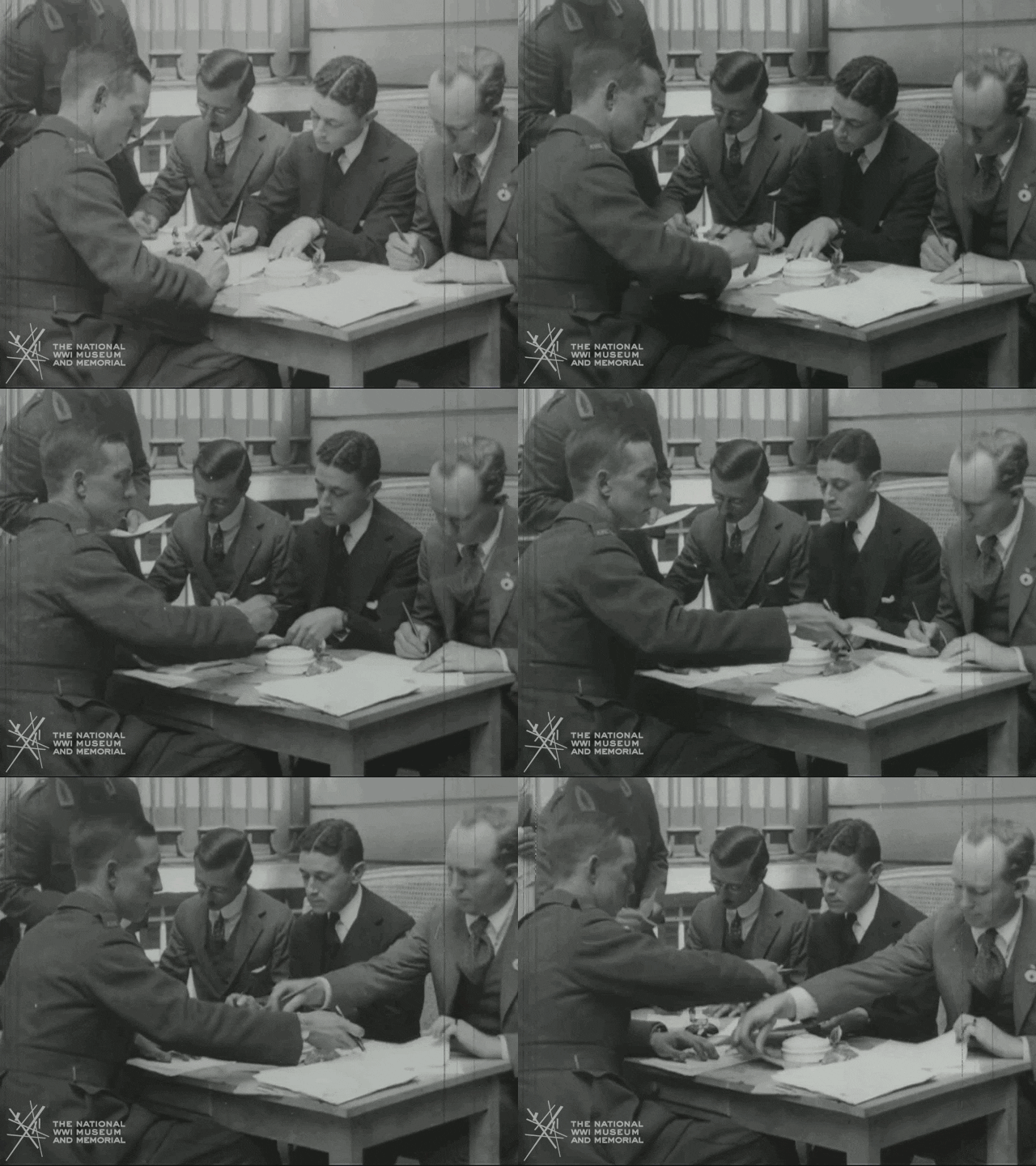
And this video I’ve posted a few times of Craig Petty not doing a great job at acting amazed by a trick.

For some reason—known only to him and his god—George felt the need to combine these elements into one video.

So he drew a picture of Houdini.

And he gave him a face-tat. (It says, “Morse-understood,” (for Morse code) instead of Misunderstood.)

Put it on video with “Do You Know the Way to San Jose” remixed with the audio of “What? What? No” from Craig Petty.

So, on the off chance you woke up this morning and were wondering why such a combination of these elements doesn’t already exist, wonder no more. Now it does.

Alphablocks Text and Ideomotor by Proxy

Whaddup?

Okay, so today’s post is a further exploration of the Alphablocks concept made famous (?) by me in this post.

Now, I try not to pimp my own ideas too much, but if you’ve been sleeping on this concept because you think it’s just a progressive anagram variation, I would encourage you to give it a second look. While there are similarities with a PA, I find this feels much fairer. And that’s because you’re never getting any definitive information from the spectator. In a PA, if the spectator says there’s a B in the word, then it’s clear there’s a B in the word. With Alphablocks you never get that clear-cut information. But you can still narrow down from a large group of words relatively quickly.

I’m posting about this again today because a couple weeks ago I had an idea to make the process much more usable and I sent the idea along to Warwick Harvey who worked on the original version of the Alphablocks tool and within hours he had figured out a way to bring that idea to fruition.

Go back and read the first Alphablocks post if you haven’t yet because it will help to have the understanding of how the basic idea works.

In that version of the tool, you were working off a list of words. Either a list of words you came up with, or a list of words the spectator came up with (as in the Mind Reading Dice trick).

In this version of Alphablocks (known on Warwick’s site as Alphablocks Text) you can do the same basic effect with any (relatively small) chunk of text. So you can do it with song lyrics or a poem or a recipe or the first couple paragraphs of a news article, novel, or speech. Essentially whatever you want as long as it’s not too lengthy.

Here’s an example of what it looks like in action

Ideomotor by Proxy

Recently I called up a friend and suggested we try something out over the phone. I asked her if there was a poem or a soliloquy she had memorized in school or something else she remembered memorizing when she was a kid. The best thing she could come up with (hardly a poem or soliloquy) was the lyrics to the Golden Girls Theme Song.

“Have you ever heard of ideomotor actions? Okay, so they’re like these unconscious, imperceptible movements that people make based on their own expectations. And then those movements get magnified by something you’re touching or holding. So, like, with a ouija board. That thingy moves because you’re expecting it to move and thus you make it move. Or a dowsing rod. You don’t think you’re moving it yourself, but you are. The classic example is with a pendulum.”

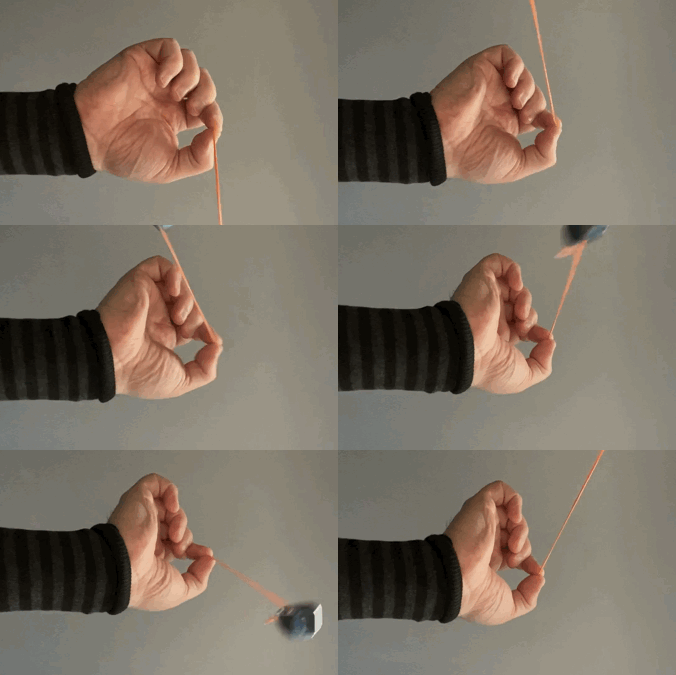
I had her grab a necklace with a pendant on the end of it and I showed her how if she held it like a pendulum and just thought “circle” or “line” she could get the necklace to move in a certain manner.

“But what I’m looking into is something way crazier than that. It’s called Ideomotor By Proxy. And what that is, is the idea that you can control a pendulum with your mind when held by somebody else. I know it sounds bananas but I’ve seen it work.

“So here’s what we’re going to try. I want you to think of any word in the Golden Girl’s theme song. Nothing too short. Nothing with just two or three letters. But you don’t have to pick out a word that stands out in any way either. It can be anything. We’ll just use a word from that song because it seems to work best with something you ingrained in your memory as a child. That tends to leave an imprint on the part of your brain that controls this ideomotor function. So do you have a word from the song in mind?”

I had her go onto facetime with me so she could see what I was doing on my end.

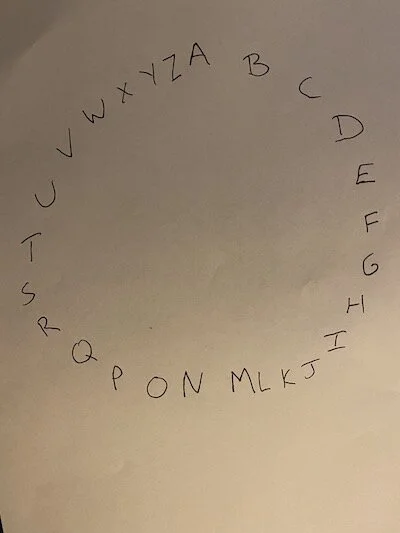
I showed her a piece of paper with the letters of the alphabet written in a circle.

IMG_7336.JPG

I explained that I would hold my pendulum in the middle of that circle and she would think of the letters in her word on her end, and I would see what letters the pendulum was drawn to on my end.

“It might take a few minutes for it to get calibrated, but do your best to stay focused. I’ll try using different hands and holding the pendulum at different spots and we’ll see what gets the best results.”

I placed the phone in the middle of the circle of letters and held the pendulum above it and commenced the “first round.” From her perspective she just saw the pendulum moving in above the phone.

IMG_7332.GIF

“Okay… the letters I’m getting are… E… N… V… and… maybe W too. Yeah, it’s bouncing around from E, N, V and W. Uhm… don’t tell me which letters, because I don’t want to know—I have to be totally out of the loop for this to work or else my own ideomotor effect will move the pendulum instead of yours—but were any of those letters in your word?”

No, she said.

“Hmm… okay. Let me try my other hand.”

In this round the letters were B, C, D, and G. “Are any of those in your word? A few or just one? Just one? Okay. Well, that might be luck or it might not. Let me try shortening up the pendulum.”

On the third round the letters were A, F, K, and T. Once again there was only one right letter.

“Okay, okay,” I said, cautiously optimistic. “That might not seem like it’s working. But if when I held the pendulum here we were just picking up on one letter, and when I held it at this point we were also picking up on one letter. So that means—if this is working—those would be the two far ends of a bell curve, which would mean the sweet spot should be directly between those two points. on the pendulum” Obviously I’m just making shit up here, but as long as it seems like there’s some process I’m following, then it doesn’t really matter the specifics of what I say.

I switched my positioning on the pendulum a final time. This time I’m held the phone with my right hand, pointed at me, while I concentrated on what was going on with my left hand and the pendulum. So she’s just seeing my reaction. “Oh shit,” I said. “I think this is really working. It’s moving totally differently now. Uhm… hold on. What is it… A… D…R…O…A… Adroa-something? Wait… R-O—Road?! Are you thinking of the word ‘road’?”

Her mouth dropped open and she ran her hand through her hair. “What?!” she said.

“Seriously?” I asked. “It worked? Wait… ‘road’ is in the Golden Girls theme song?”

“‘Traveled down a road and back again,” she said.

“Oh right! Holy shit.”

Method

When I had her on the phone originally and she mentioned the Golden Girls theme, I just kept talking to her while I did a google search for the lyrics.

I copy and pasted those lyrics into the text version of the Alphablocks tool here.

I like to set the parameters so it looks like this:

Screen Shot 2021-05-18 at 2.25.22 AM.png

But that’s just my personal preference.

After a few seconds of processing, the tool gave me a few options:

Screen Shot 2021-05-18 at 2.27.29 AM.png

When it says “rounds” it’s talking about how many rounds of letter guesses will be required.

So I could have said, “Think of any long word in the song… at least 8 letters.” And then I could have done the guessing in just one round. But because there are only three options for words that long in the song, it wouldn’t have been very impressive.

Looking back now, I probably would take the second option if I gave it a little more thought. I could have said, “Think of any word there. Nothing too short. Make it at least five letters long.” And then I could have got the word in just two rounds.

But in the moment I took the third option, which allowed me to do the trick with essentially any word in the song. (Well, any word over three letters.)

So I click that button and it gives me the chart which tells me how to proceed. It might look complicated, but once you familiarize yourself with how these charts work, you’ll see it’s very simple.

Screen Shot 2021-05-18 at 2.39.34 AM.png

The results from three rounds I did with my friend were 0 letters, 1 letter, 1 letter. So if you start in that first column you’ll see 7 words will have 0 letters in that first round. Of those words, only Road and Gift will have one letter in the second round. And of those two, Road is the one that has one letter in the third round.

The pendulum works nicely with three rounds of letters. In the first round I hold the pendulum near the middle of the string. In the second round I move towards the end. If the results of the second round are better than the first, I move further in that direction. If they’re the same or worse, I move the other direction. Then, based on the results from the three rounds and apparently “triangulate” the perfect position.

As in the Mind Reading Dice effect, I want them to believe this might take many, many rounds to complete. So when it only takes two or three before it works, that should feel extra surprising.

I keep my laptop with the chart visible on it on the same table I’m doing the pendulum work on. I just never turn the camera in that direction once we go to facetime. That’s why I like having the phone in the middle of the circle for most of the rounds. It keeps the camera pointed at the ceiling rather than anywhere near the computer (not that they would know what they’re seeing if they did get a glimpes of the computer screen.) And it’s kind of an interesting angle, I think, for the spectator. Just seeing the pendulum dangling above as I call out the letters.

Keep in mind, this is just an example of one way to use the tool. You don’t have to use a pendulum. Does a pendulum work really well in this context? Yes. Is the concept of the ideomotor effect happening by proxy a great presentation? Yes. It takes something real that the spectator can research and verify is legit, and pushes it into the realm of the fantastical. It’s typical Jerx brilliance, what can I say?

But that’s just one way to utilize this tool.

How else might you use this, Andy?

However you want. Get off your ass and figure something out. Can’t you do anything for yourself? You need me to come over there and hold your little weenie for you while you take a piss and shake it off when you’re finished too? Warwick and I have done all the work here so far. Now you rattle a few of your own brain cells together and see what you can come up with, you lazy bitch.

Okay, byeeeeee!!!!!

Dear Jerxy: On Switching

DearJerxy.jpg

Dear Jerxy: Now that I've started doing your type of magic, I find that many outstanding experiences require the simplest thing -- often, just a switch. But it gets harder with these bespoke tricks because now I'm switching rocks, notes, video games, artwork or boxes. Are there any switches you always come back to? I know you're going to say I'm overthinking it -- just lap it or use an offbeat or move a pillow around... I think about those too! But I wonder if you have gimmicks or specific switches that give you a lot of mileage because I need to expand my switching repertoire. Z-wallets, Quiver, Angel Case, thumbtips, etc...

Signed,
Looking for a Switch Bitch Session in Los Angeles

Dear Looking: This is a good question for which you have accurately predicted I will have an unsatisfying answer. Other than a thumbtip, I don’t use any switching props/gimmicks that regularly. Although I do have a z-wallet, Quiver, Angel Case, and so on, and they all work great for what they do. The issue, for the amateur performer, is if you place something in a little leather pouch and it changes to something else, you may have performed a good trick. But the next time that spectator sees you place something in a little leather pouch and it changes to something else, they’re going to think, “Oh, I guess that little leather pouch changes stuff.” That’s also true for an unusual wallet, or a black envelope, or a hinged box. Used once they might not draw much attention to themselves. But if a spectator notes that every time you place something in this particular container, it changes to something else, the container becomes suspect.

So I do tend towards prop-less switching (or invisible gimmicks like a thumbtip). And the prop-less methods for switching do tend to be situation-dependent, audience-dependent, timing-dependent, and object-dependent. So it’s hard to give specific advice on what switch to use.

Instead I will give you two general switching tips that I’ve found to significantly cut down on the “you must have switched it” answer from people.

Motivate Your Movement - If the object of the spectator’s interest goes out of view for a moment, it’s quite easy for them to think that maybe it was switched. But if it happens in the process of a recognizable human action then, in my experience, it becomes much more psychologically invisible.

If you’re watching me perform and I have you shuffle a deck and I take it back and then at some point the deck dips under the table’s edge for a moment, that might raise some suspicion on your part. Even if it happens on an “off beat.”

But if you shuffle a deck and I take it back and at some point adjust my chair, I find the suspicion to be much less. Even though “adjusting my chair” involved the same action of the deck of cards going under the table for a bit. The normal human motivation of grabbing my seat and pulling it in a little is so recognizable that it drowns out the “questionable” moment of my hands going out of site. Not completely, and not 100% of the time. But as a general principle, it seems to work very well.

So try to give the movement required by your switches a recognizable motivation and that will go a long way to hiding the switch.

(And no, putting your hands in your pockets as a sign of “relaxation” doesn’t count. Magicians think this looks casual, but most of the time they’re wrong. Showing someone a magic trick is an act of inviting them to see something exciting or interesting. And that’s incongruous with the pose of just leaning back with your hands in your pockets. So even if they don’t think, “I bet he’s getting something from his pocket” or, “I bet he’s ditching something in his pocket,” I do think it’s a pose that doesn’t quite feel right. )

Maintain a Constant - I use this a lot, and I think it’s really deceptive. The idea is this: If you have something that’s being switched, try to have some element of that thing that is never switched.

For example:

  • If you want to switch a pen that works for one that doesn’t, then it’s particularly fooling if the cap is on the table or in the spectator’s hand before and after the switch. The cap is the constant. The pen came out of that cap and it goes back into that cap, so I think that helps it feel like the same pen.

  • It’s better to switch the drawer of a matchbox, and place it into the sleeve that never left their sight, than to switch the entire matchbox.

  • Overwhelmingly, I’ve found the most fooling deck switch to be one where some cards are already in play, and you switch out all the other cards. Then the cards that are in play are added back to the switched in deck (which is missing those cards, of course).

Obviously, I can’t always work a switch in this manner, but I do so whenever I can.

Off of This Couch

For a long time this was one of the main ways I performed Out of This World. It uses both of the elements described above.

My friend and I would be sitting on the couch. I’d have her shift down so there was some space between us. I’d give her a deck to shuffle. A matching deck, separated into red cards and black cards (and missing the Ace of Spades and the Ace of Hearts) would be behind a throw pillow, between my leg and the couch, in the crack where the cushion meets the couch, or under my leg.

When she got done shuffling the deck I’d tell her to pull out the Ace of Hearts and Ace of Spades and set them face up on the cushion between us.

I’d hold the deck in my hand and have her direct me on where to put each card; on the heart if it was red, on the spade if it was black.

After a few cards had been dealt on each ace, I would notice the cards sliding due to the cushion not being completely flat. I’d look around to decide a better place to do this, gather up the cards that had been dealt already, and suggest we move this over to the kitchen table.

In the process of getting up, my hand that was holding the deck would be blocked from her view by my body. And in standing up, I’d drop the shuffled deck behind the pillow and pick up the prepared deck.

I’d have her grab the aces and we’d move over to the table. I’d deal a few cards at her direction, but eventually I would just hand her the deck to deal through and complete the OOTW effect in a standard manner.

Each step here feels either very clean or very logical.

They shuffle the deck - Clean
They remove the aces - Clean
I take the deck and immediately take the cards one by one from the top of the deck for them to mentally assess - Clean
The fact that we’re doing this on the couch, causes the packets to slide around, making it a bit disorganized. - Logical
I suggest moving this process to the kitchen table - Logical

The only moment that might need some justification is why I take the deck back after she shuffles it. Why don’t I just have her deal the cards? The logic I use is that I’m going to mentally send her the color of each card. So obviously I need to see each one, so it makes sense that I would hold the deck. It’s only once we relocate to the table and we’ve started over and I’ve dealt a few cards again that I say, “You’re doing really good, actually. I think you could do this without me.” And hand the deck to them to deal the cards.

This makes sense, and it escalates the effect in a nice way.

Now, objectively speaking, there is obviously plenty of time for me to switch the deck using this handling. But I don’t remember that idea ever coming out of a spectator when I used this method. And that’s saying something, because switches are a pretty common conclusion that spectators come to for all types of tricks. I’ve had them think a switch was involved with OOTW when I used methods that didn’t use any switch. So a version of OOTW that uses a genuinely spectator-shuffled deck and doesn’t scream switch, indicates to me that the fundamental techniques used must be fairly strong.