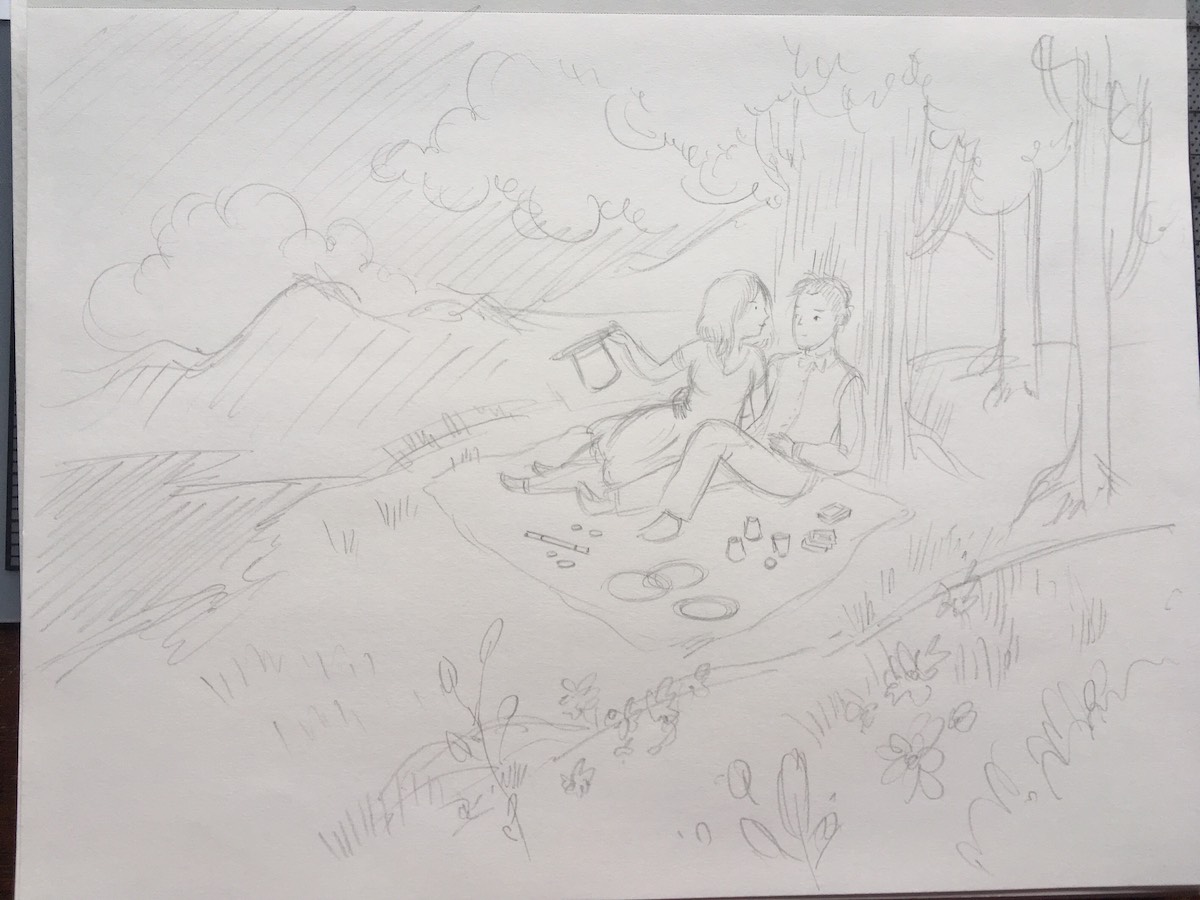
Horn Tootin' #1

In yesterday’s post, I was saying how spending your time on message boards and facebook groups may make you less likely to get out there and actually perform. I’m not saying that’s true for everyone. I’m just saying for some people it’s likely to scratch that itch.

However, one positive aspect of message boards that you don’t get on this site is feedback from other people who are trying these things out and having success with them. You kind of only hear my experience and then that’s it. And I never go back and say, “No, seriously, you guys need to really go try this [trick or technique],” because that’s just not my personality. And I’m usually onto something new (even if, in my real life, I’m still performing the trick regularly).

But I realize it can be motivating sometimes to hear from other people who have tried something out and had success with it. So I’m starting a new series that I’ll put up every couple of months or so where I post some email feedback I’ve received about certain tricks/techniques.

As you can probably piece together due to the fact that I run the site anonymously, I’m not someone who requires much praise. I’m facetiously calling this series “Horn Tootin’,” but the purpose is not to try and beat into your head how special I am.

giphy.gif

I’m posting it because I’m hoping it will cause you to go back to something you overlooked or forgot about and inspire you to get out and perform some more.

I’m not going to dip too far back into the email archives, so don’t feel like your words didn’t resonate with me if I don’t post your email. This is just something I thought about doing in the last few weeks and these are some of the emails that came in during that time….

✿✿✿

Yento blew the doors off with my kids and family, and is something they'll be talking about for a long time.  It's also started some threads that will persist when it comes to the weird secret society of magicians that works in the background that will pay off down the line, so that's fun. -- MJ

✿✿✿

I recently decided to try "Memphis" from the JAMM 11 with one of my co-workers. [...] Anyway, later that weekend I got a picture of two people holding the same card and the message "IT FREAKIN' WORKED!  CALL ME NOW!".  I texted back how awesome it was that it worked and that I'd call her the next day and get her feedback (I had set up part of the presentation as something really difficult I was trying in an effort to complete a particularly tricky WWS assignment).  Here was her response:

“Sounds good!  I did it with some family friends too and they loved it.  Awesome way to spend time together!” -- JR

✿✿✿

“A Very Unusual Camera” from JV1 is an effect I’ve been wanting to do for a long time now. It took me a few read throughs of the effect just to really understand it. Initially it seemed like the most complicated trick I’d ever read, but I finally had the chance to perform it this weekend and the way it came across in performance is actually so simple and powerful. […] One of the people in the group I performed for knew some magic and he was convinced someone else must have been in on it or some app was involved. — P.H.

✿✿✿

One more data point for you and your emphasis of presentation over impossibility. I’ve performed Paul Harris’s Perfectionist trick for years. I can say for sure my wife has seen me perform it for other people at least three times in the past. Recently though I performed it with your “gypsy curse” presentation and she has become completely taken with the trick and has asked me to perform it a number of times at different gatherings since. I said to her a few days ago after another performance, “You realize I’ve been doing that trick for years and you saw it multiple times in the past, don’t you?” But she is 100% convinced she hadn’t.

I can’t say I was in agreement with most of the stuff I read on your site initially, but the more things I try out, the more of a convert I’m becoming. —D.A.

✿✿✿

[…] For instance I was able to present Yento to my daughter after I got back from a business trip to Japan. I told her I had been going in small shops in Tokyo and found this small shop of mysteries down a narrow alley where they were selling sealed "Secret Boxes". When I mixed it in with the other souvenirs I got for the family it was a big hit. It wasn't me doing a magic trick, it was a piece of magic from a far off place! -- JC

✿✿✿

I reconnected with a close friend this weekend, having made the trip out to a small gathering for his birthday. His girlfriend, who in the time I've known them has seen no shortage of my old repertoire, spent most of the first hour asking me to "show everyone a trick." I eventually pulled her aside with the "show you something I'm working on," and went into A Firm Background in Remembering. [From The JAMM #2] This was my first time performing something you've written about, and it sincerely was a unique and remarkable experience. I certainly wasn't prepared for either the magnitude or nature of the reaction she presented at the end. It was wild dude. I was able to offer her something that was inherently so distant from being “here's a trick that you won't be able to figure out,” and it was fantastic. So thank you for that, and looking forward to always having this in my pocket from now on.  — J.K.

✿✿✿

Re: TweAK 47

Just read this from 2016. Using a "fake miss" as an equivocal technique is downright brilliant. -NS

✿✿✿

My girlfriend, who is well aware of equivoque, was floored by the built-in effect in volume one. [The Choose-Your-Own-Adventure style effect demonstrating 3rd Wave Equivoque from The Jerx, Volume One.] — H.K.

✿✿✿

I also wanted to share a couple highlights of my year that were based upon discovering your blog this past September. First, was on Halloween with my wife and kids ages 7 and 3. I had just finished tiling a room, so it was empty. I explained that some invisible creature had eaten my sandwich and we should try to communicate with it. So we spent the afternoon devising a summoning circle with chalk, candle, rocks, water, etc. It was a fun family arts and crafts project. We lit the candles, the kids would place things in the circle. and things started happening.  A face up/face down deck reordered itself and separated by colors, showing that this was spirit of order. Blank slips of paper folded up with pencil lead wrote messages in answers to questions (with the spirit making verbal jabs at me personally). It culminated with coins and paper clips wrapped in tissue paper transforming in a flash to medallions to help protect against bad dreams if hung above the bed. Obviously, being kids, the medallions were lost within a week, but they still talk about the "House Spirit" months later.

IMG_20181030_172048.jpg

Yes that is underwear on his head.

The second was a Christmas present for my wife. It used your idea for the Konami Code. I had our two children in different outfits and locations around town, pointing in various directions. I thought my wife would find it cute, but it was actually a very emotional effect. Having so many pictures of people you love doing something special for you is an intense experience, regardless of any magic component. The Konami Code itself allows the magician to take the back seat and not step on the moment, since everything happens in the participant's hands and is derived from their actions. Your performance adds the emotional personal component, the meaningfulness. The reveal photo was one of the three of us, arms outstretched, taken in the same location as she performed the code. So at the reveal we could strike the same pose as the photo. Much better response than the smart watch I also got her. — B.O.

IMG_20181226_082616.jpg

Why There Isn't A Jerx Message Board

Once every week or so I get an email from someone suggesting I create a message board where people can discuss the things I write about here. There are a bunch of reasons why this will never happen. Here are a few…

1. I’m not so narcissistic that I think, “You know what the world needs? A place for everyone to come together and discuss me and my ideas!” Now, I obviously see something of value in these ideas or I wouldn’t publish them in the first place. But this attitude: “Here’s a blog about my journey and my thoughts and maybe some of it might resonate with you,” is something that feels normal to me. The attitude of, “Here’s some pearls of wisdom, for you all to discuss on the message boards,” doesn’t.

2. I have no desire to oversee a message board or even a Facebook page. That seems like such an unsatisfying way to spend my time. And it ages you. You’ve seen the pics of Steve Brooks before he started the Magic Cafe, right?

36d5ffccdaf0dcca91d64b4b3a0f84e2.jpg

3. The audience for this site is too small to support a lively online community.

4. I’m not interested in hearing every dumb idea you have in regards to something I write. I am interested in the good ideas you have or the strong feelings one way or the other. Requiring you to email me to share your feedback is enough of an obstacle that it filters out the minor praise or disagreements and instead usually leads to people writing who have something they feel is particularly valuable.

5. This site would end up being more reactive. It would just be a bunch of posts like, “Hey, over on the message board some people were wondering if [blah, blah, blah].” And then I’d be reiterating stuff from the message board because I don’t know if you’re following the threads over there. So now I’m spending time trying to keep everyone on the same page. And for the people who are on the message board, now I’m just repeating stuff they already heard and there are just too many different pathways people are on. With this site, there are just two tracks. If you like the site, maybe you come here every day or once a week and catch up on everything. The second track, for people who find they really get some value from the site, is that they sign up to be a supporter and they get all that additional content. That’s enough. You don’t need to feel like there are other conversations going on that you’re not keeping up with and are potentially missing out on.

6. And honestly, I don’t feel like people need another excuse to talk about magic, rather than be out there performing it. If your goal is to give people fun/affecting moments via magic, then talking about it online isn’t helping you. In fact, talking about it is probably demotivating.

I value the internet as a reference and I think it has sped up the “science” behind magic so much, to the degree that we’re getting advancements in methodologies at an incredible rate. However I think it’s probably been a detriment when it comes to just enjoying the moment with another person through magic. (Or through anything, for that matter. ) The advancements in using magic as a social engagement are only going to come from people out performing it in the real world, not chit-chatting online like a bunch of old biddies.

So those are the reasons why there won’t be a Jerx message board.

Now, there is one element of a message board that I think would help with the goal of getting people out and performing more that is missing from this site, and that’s something I hope to address in a new series, the first installment of which will appear tomorrow.

Earn the Elements

“I want you to write down the initials of the person who was your first kiss.”

I’ve been seeing this a lot in mentalism routines lately (or some variation: first crush, first boyfriend). It makes sense because it’s a subject that has strong ties to the “emotional elements” as I’ve been talking about this week. So you would think I’d be all for this sort of thing. And I am. But the problem is, it’s almost always used devoid of any other context.

Imagine this… You operate a train yard. You’ve been having a problem with some assholes coming in and tagging some vile shit on the outside of the train cars.

14419137561_0e705cba67_b.jpg
30521548283_5d0f3da3aa_b.jpg
3972763451_2d78e0a2ed_b.jpg

I sell a product that easily removes the paint and protects the surface so that it can’t be painted on again. I come to visit you to demonstrate my product. We walk out to one of the train cars and I hand you a can of spray paint. “I’ll show you how it works. Here… I want you to spray paint the initials of your first kiss on the side of this car.” Why would I do that? If I’m demonstrating my paint cleaning product, why does it matter what you paint on the car?

Ok, we get that. Now, following that logic, if I’m demonstrating my mind reading abilities, why does it matter what you’re thinking of?

Well… because… you know, a first kiss is an important moment… so that’s ingrained in someone’s memory… so that would make it easier to read that information from their mind.

Ok., great… just fucking say that then!

But it’s implied.

Maybe. But why leave it that way? If you fully explore why you’re asking for a specific piece of information, that can turn out to be the most interesting part of the presentation. In fact, that can be the presentation.

For example…

“Think of a random four digit number and I’ll read your mind.”

That would be impressive, but because it’s kind of generic, it’s likely not going to stick with an audience in the long term.

“Think of the passcode to your phone and I’ll read your mind.”

Better. This has some stakes to it. But why the passcode to their phone as opposed to just a four digit number? Is it just because it has some stakes to it? If that’s really the only reason it may seem unearned. But if we further explore why the passcode as opposed to a random set of four digits, we might steer ourselves into something more interesting.

“Think of the passcode to your phone and I’ll read your mind.

“You’d think a phone passcode or an ATM pin number or something like that would be the hardest thing to guess because it’s something we put effort in to keeping secret. But actually the act of trying to keep things secret is what creates physical, emotional and psychic clues to information.

“Think of if this way… If you’re cheating on your wife, she may find out about it because of the actions you take to keep it a secret. Maybe your behavior or your attitude changes; you become overly complimentary and generous towards her. Maybe she finds one of those secret text apps on your phone. Maybe you’ve been showering at the hotel after your mid-day encounters and you smell different when you come home. Or whatever. It could be any number of things. But it’s evidence that exists because you were trying to keep something secret.

“On the other hand, think about something you weren’t trying to keep secret. Say… what you had for lunch on the fifth of February. This is something you haven’t been trying to hide, so there are no residual clues from your deception. And therefore it would likely be very difficult for someone to learn that information.

“This happens on the level of the mind as well. The information we’ve spent much of our life guarding becomes some of the easiest information for others to discern because we leave clues .”

That’s written as a soliloquy, but you can imagine how it could easily be a conversation. And not only is it more interesting, conceptually, for someone to think about than a similar trick with no rationale, but it also naturally leads to some other demonstrations if you follow the logic presented in it. (A three-part routine based on this idea will be included in the next book.)

Now, if you’re performing trade show magic, then maybe you don’t have time for a multi-paragraph explanation for why you’re asking for the information you’re asking for. but you can certainly come up with a couple of lines to give things more context. (And if you’re a social magician, then there are a lot of benefits to not interacting with your friends/family the same way a magician would interact with a stranger at a trade-show. )

So we’ve gone from reading their mind of a random four digit number to reading their mind of their phone passcode to providing a much richer explanation of the how and why behind that effect. Each step taken expands the trick

Don’t want to stop there? Okay, here’s a final “emotional element” you can add to a phone passcode reveal. You have to know the person you’re performing for pretty well, and you have to not be considered a creep, generally. Before you start the trick you tell the person to go to the bathroom and take a picture of their dick or tits. That’s it. No, you don’t do this for grandma’s pastor. You do it for people you know who aren’t going to get all shocked and appalled with magic that deals with some mild sexiness. Don’t force someone to do this, of course. With the type of people I hang out with I have multiple options if I ask someone in a social situation to go do this.

It’s not 100% gratuitous (only, like, 85%). I tell them that I’ll read their mind and figure out their passcode. The recent nude in their camera roll is an extra pressure point for them to not want me to gain that access. And—as I explain in the presentation above—that increased pressure to keep the information a secret is what I’ll use to discover their “psychic weakspots” or whatever.

With the right person, or the right crowd, this is wonderfully entertaining. Certainly more so than an identical trick where you discern a random four digit number.

If you don’t know if you’re with the right person or the right crowd, or you don’t know if you’re the sort of person to pull off this kind of interaction, then you’re not. Don’t try it.

Emotional Elements

[Excerpted from Magic For Young Lovers]

What do I mean by emotional elements?

It may be easier to understand by considering the lack of such things in most magic.

Imagine the hobby/art of magic didn’t exist. Then one day I come up to you and say, “Hey, I’ve invented this new thing. It’s called magic. It’s a new artform where you demonstrate the impossible to people. Sounds great, right? Here’s the problem. I think it might be too powerful actually. Can you think of the blandest type of things you could do with my newly invented artform so that it won’t rile up the common people too much?”

The next day you return. “Your highness,” you say. (I didn’t mention but I guess I’m the king or the ruler in this situation.) “I’ve come up with the dullest possible demonstrations of this thing you call ‘magic.’ First, how about this, you take some balls and cover them with cups and the balls move around. Second, you take three rings, unlike any you’ve ever seen, and you make them link and unlink. Finally you take a bag and an egg. You put the egg in the bag, and then the egg is no longer in the bag. But then it is again. Huzzah!”

I would applaud you for doing such a great job at coming up with magic that is so utterly pointless. Magic that has nothing going for it other than just impossibility.

Isn’t that enough though? Isn’t that what magic is: doing the impossible?

For a long time I believed that what set magic apart from all the other arts was its ability to surprise with the impossible. Therefore, what we should put our emphasis on is the nature of that surprise.

But what I’m finding is that the feelings of being surprised or fooled aren’t really lasting emotions. They’re not sticky emotions. They’re fleeting.

So, yes, there should be a surprise, but there should also be an emotional element to the presentation so that it sticks with people as time passes.

So what are emotional elements?

An emotional element is an emotion or an object, location, or concept that is likely to affect someone emotionally.

In this book I highlight five emotional elements: relatability, novelty, time, nature, and humor. These are just a few examples among hundreds of concepts that could be considered “emotional elements.” Other broad concepts like this would be nostalgia, fear, music, family, and romance; each of which are demonstrated in effects in this book.

A presentation that incorporates one of these subjects is going to offer opportunities for the spectator to connect to the effect emotionally.

But there are millions of smaller types of emotional elements as well that can be found in the items we use, the places we perform, and the processes we create through which the magic happens.

A torn and restored card is all impossibility with no other outside emotion. A torn and restored picture of your ex-girlfriend may be an almost identical trick, but it resonates on more frequencies.

And you don’t have to point this out to people. This isn’t a lecture about some emotional concept as demonstrated through a trick.

As I said, this is about seeding a trick with emotional elements and letting the audience determine which ones are going to take root.

Thinking back to the Time Capsule trick, what are the emotional elements? What made that more than just a torn and restored card? Our reunion after many years apart, our walk on the cold winter night, visiting our old sledding hill, the lunchbox and all the items inside, even her childish scrawl on the playing card. All of these elements played into the presentation and gave her a chance to connect to the effect in a different way than she would have without them. Because of that, the trick may come to her mind whenever she finds herself back in our hometown in winter, or when she sees her kids sledding, or if anyone ever mentions a time capsule, or even just because she sees an old lunchbox. She’ll be reminded of that experience via whatever ways she related emotionally to the trick.

This is what emotional elements do. They give your audience other access points to the memory of the effect. Emotional elements don’t take away from the impossibility of an effect, they just give the audience more opportunities to consider that impossibility.

If you were a pie baker and you made really good tasting pies that you just set on the table for someone to eat, they might remember that pie in the future when they were hungry and in the mood for pie. But, if you feed a person that pie at the end of a romantic dinner, or at a picnic, or late on a summer’s night under the stars, or as a precursor to a pie fight, then you’ve added some emotional elements to the eating of the pie. And you’ve added more mental triggers for them to think about the pie and then think, “Damn, that was a good pie.”

“Damn, that was a good pie,” is to pie bakers what, “Damn, that was amazing,” is to magicians. It’s the feeling we want to leave them with and emotional elements give them more reasons to relive the experience and that feeling.

Mixed Emotions

I’m a big believer that magic needs to touch on emotions other than “surprise” in order to be memorable and to stay with people. This was the through-line of Magic for Young Lovers. But I also know that the hobby of magic often appeals to people who aren’t great in regards to their emotional intelligence, so suggesting they try and connect with people via their tricks is antithetical to why they got into magic in the first place. “You think I’m practicing card sleights for four hours a night because I’m good at relating to people on an emotional level?”

I’m going to empower you. I’m going to help you move from socially awkward to socially adroit (at least when it comes to magic). I have some posts coming up about the emotional aspect of magic tricks, but first I need to lay some groundwork so we’re on the same page.

Here is the evolution I often see with people who try and endow their magic with some emotional relevance.

Hey… this is cool. I’ll make the card come to the top a bunch of times for no real reason.

I know. I’ll arbitrarily change all these coins from silver to copper then to Chinese coins. Sweet.

Maybe I’ll cut this rope in a bunch of pieces and the restore it and change their lengths. Heh-heh… now that’s some impossible stuff.

Hmmmm…. you know what? All of this seems sort of frivolous. I think I need to perform some effects that touch people emotionally.

I wonder what I can do to make people cry?

Like, what the fuck? That’s the leap you make? From just performing a series of meaningless impossibilities to wanting to make people cry? There’s a whole emotional spectrum that you kind of jumped over there. You don’t need to go to that extreme. That would be like if people were taking advantage of you at work and I said, “Hey, don’t let them bully you. Stand up for yourself.” And you said, “I know. The next time they tell me I have to work on the weekend I’ll murder them.” Like whoa, pump the brakes a little.

Yes, I’ve made people tear up through magic, but usually because they’re connecting to something on a level I couldn’t have anticipated, not because that was my goal. If you go into it with that intention, it’s going to come across as awkward at best and manipulative at worst.

The key to an “emotion-based” presentation is simply this: put the trick in a context people can identify with. By its nature, the surprise or the impossibility of an effect is the part to which they can’t really feel a connection. But the framework you put the trick in is something to which they can relate. And that’s going to be how you engage their emotions in a subtle way (not like, “Ok, I want you to think of the initials of the man who sexually assaulted you.”)

Tomorrow I’m going to delve into this subject a little deeper and post an excerpt from the opening essay of MFYL.

On Friday we’ll look at the half-hearted way a lot of professional mentalists try and inject emotion into their presentations, and why it comes across so poorly. Then I’ll describe a way to adapt that weak technique for social situations to make it much stronger.

Dustings of Woofle #3

There are some questions in my email box about some logistical things regarding supporting this site. So just to be clear…

1. Magic For Young Lovers is completely sold out. There is no reprint coming and no ebook version coming.

2. The next book that will come in January 2020 is also sold out. Some slots may open up if people drop out, and I’ll create a waiting list for any that do, but otherwise, that’s it.

3. Some people seemed to think there might be a separate blog for supporters. God no. I’ve mentioned I’ll be reserving the most valuable tips, tricks, theory, and testing results for supporters, but that will come out in the publications supporters receive (digital and physical), not on a separate site.

4. The first quarterly newsletter for supporters will be out next month.


A lot of magic is fooling but not particularly magical. It’s rare that we see something that is the opposite: magical but not fooling.

These appearing business cards look great, but no one will have any question about how the ink appears.

One thing I’ve learned via testing magic is that one of the first “explanations” an audience will have for something appearing/disappearing/changing color is that it happened via a change in temperature. Even when we did a color changing deck, this was one of the most common explanations given.

In this case, where it looks exactly like what laypeople have seen of things changing via heat, there’s probably no way around the fact that they’re going to jump to that conclusion. I’m not trashing the idea. Often I’d rather do something magical looking that doesn’t fool people than something that fools people but is just a puzzle to them. (Obviously the ideal is both… something that doesn’t fool them and isn’t magical looking. Wait. No… the other way around.)

I’m thinking of having some business cards produced that identify me as a the chief product designer for Freezy Freakies. I think that would be a fun lie to tell people who I meet briefly.


Is anyone available to do a wellness check on Max Maven?

I was perusing Penguin’s live lectures the other day and saw that David McCreary’s lecture had almost 700% more five star reviews than Max’s lecture the following week.

Screen Shot 2019-03-10 at 5.15.53 PM.png

Max presented a three-phase 20 minute mentalism act based on his 50 years of being a pioneer in the field of mentalism.

The highlight of David’s lecture was his suggestion that you put marshmallow fluff in an Elmer’s Glue bottle and squeeze it in your mouth during the show so it looks like you’re eating glue.

This just feels to me like the type of thing Max would see and say, “Ah, okay. Well… the public has spoken,” and the next thing you know he’s napping on the railroad tracks.


From the Bitches Be Crazy Dept.

I’ve got good news for you, your copy of Magic For Young Lovers has become just a touch more valuable as it has become even more exclusive.

The bad news, for one Jerx supporter, is that this is what his ex-girlfriend did to his copy. Yikes!

20190307_093848.jpg