
Mailbag #176
/
I don’t think you’ve written anything about Instant Paper to Money
It’s really smart and hyper visual but even in a pro setting it’s a pretty strange prop. Let me show you what I can do with my several pieces of perfectly rectangular cut sheets of glossy magazine clippings that are all identical in size and are in my speciality weird wallet.
I bought it without thinking because it is stunning and while the hype has died it was and is still being proclaimed as the new best method and Extreme Burn killer. However, once I got it I just sat on it because these damn slips of paper are so unusual it’s annoying. After weeks I finally gave it a go and tried to just get out of my own way and clear my head trash only to have my audience immediately question and ask about the slips of paper that are conveniently perfectly cut and sized to a $20 bill. Even in a professional gig this feels like an impossible hurdle whether the audience verbalizes it or not. Maybe I’ll intentionally tear the edges and make them look ragged and less perfect. In fact maybe that’s what the creator should do, send them slightly oversized so the buyer can tear them up a bit to fit but still be truly torn.
Regardless I’m again left feeling like most people don’t really perform and the marketing engines are stronger than one may assume.
As a fellow Extreme Burn user, where you at on this one?—SK
For a casual performance, Extreme Burn is a much better option. Changing 1s to 100s is more organic and it’s examinable. And you can keep it in your wallet or pocket like a normal human.
That said, this is a pretty trick.
I don’t think ripped edges really solves the problem you’re facing. Now you’re a person carrying around ripped pieces of paper rather than cleanly cut pieces of paper. That doesn’t make you any less weird.
I think the best approach is to address it presentationally. If you’re demonstrating a counterfeiting technique, or a way to hypnotize people to see cut up paper as money, then it makes sense you would have these items with you to demonstrate such a thing. That’s more than enough reasoning in professional performing stiuations. In social situations it could still be seeen as somewhat unusual, but there’s no way around that really.
This video for "Headache" shows up in my feed a lot from Penguin. It's so obviously AI due to the way the camera pans and the creator shows up in different places that it's almost excusable. But the effect and reactions are also included in these seamless extended scenes so it's questionable what is real if anything and what's not. —RD
Yeah, I’m certainly not going to wave the flag that there should be no AI used in magic advertising at all. I can see they were trying to do something interesting with it there. But I can also understand why it would make any ad that uses it feel suspect.
More importantly, if I was marketing magic, I’d want to avoid AI because it has a certain charmless-ness to it. I know very few people who say, “Oh, look at this great AI ad!” But I know tons of people who are actively turned-off by it or find it weirdly unsettling.
What’s interesting is the ubiquity of AI has led to advertising that is technically more professional and polished, but people now associate that AI look with cheapness not professionalism. Like every shitty restaurant I know has advertising that looks like this now.
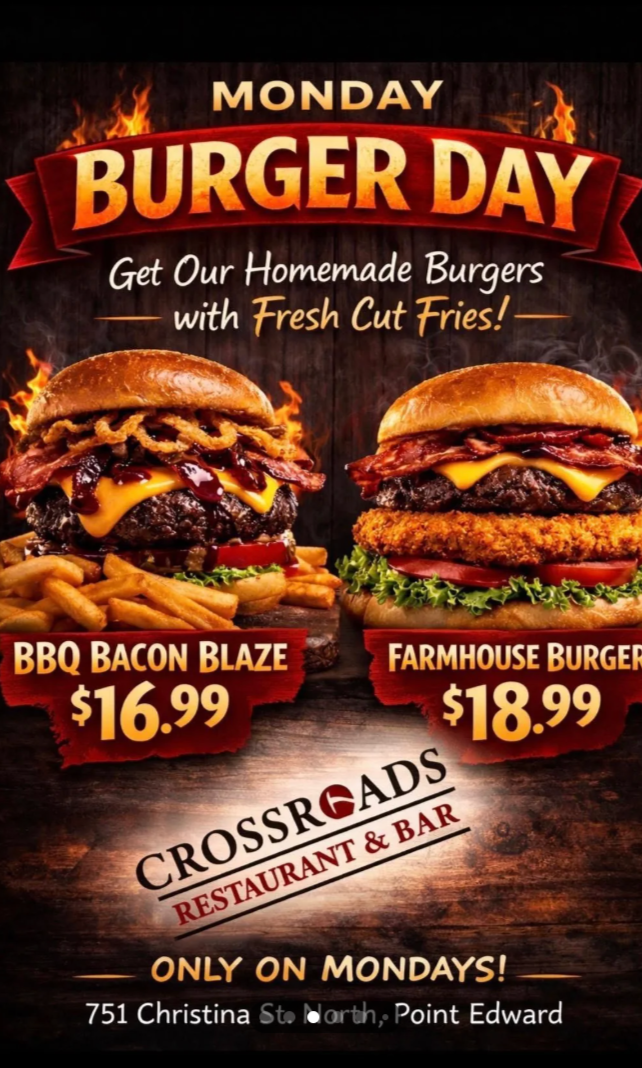
And while that might have looked fine 10 years ago, now it just looks like they put the least possible effort into it. And it raises the question, “If the food here is good, wouldn’t you want to show us pictures of the actual food?”
I tend to feel the same way about magic advertising. It seems like the biggest selling point should be the demonstration of the routine. When this is chopped up, abbreviated, modified with AI, or not shown altogether, it doesn’t instill great confidence in the routine.
Regarding Headache, I don’t find the AI use egregious. It just doesn’t add anything to the marketing for me personally.
Protection Spell is a good starting point to anyone new to the site. In making my notes for the site, I finally read about this and have shown it to a couple of people. The cards and pencil are in my wallet and I think this is a pretty good litmus test to see if handling this kind of material is something the performer is comfortable with. Originally, I had tried to think of a basic beginner trick to apply your ideas to and chose 8 card brainwave. This has its own problems if it’s something you carry with you everyday (space, examination, magician-centricity) and Protection Spell just keeps the same essence. Getting to this conclusion was a lesson in how effect has priority over method choice. —CJR
Protection Spell is good for both people new to the site, and audiences new to the style of presentation I write about here.
It’s a small effect (50/50) so you’re not asking them to play along with something too fantastical. And you can gauge their interest as you delve into the presentation, and if they don’t seem engaged, you can jump to the climax fairly quickly. This lets you know that in the future they’re probably not someone who is going to be locked into a long-form, more immersive trick.
There’s a shockingly dull trend that hit the DFB facebook page today and unsurprisingly is very popular there. What do you think? — JC
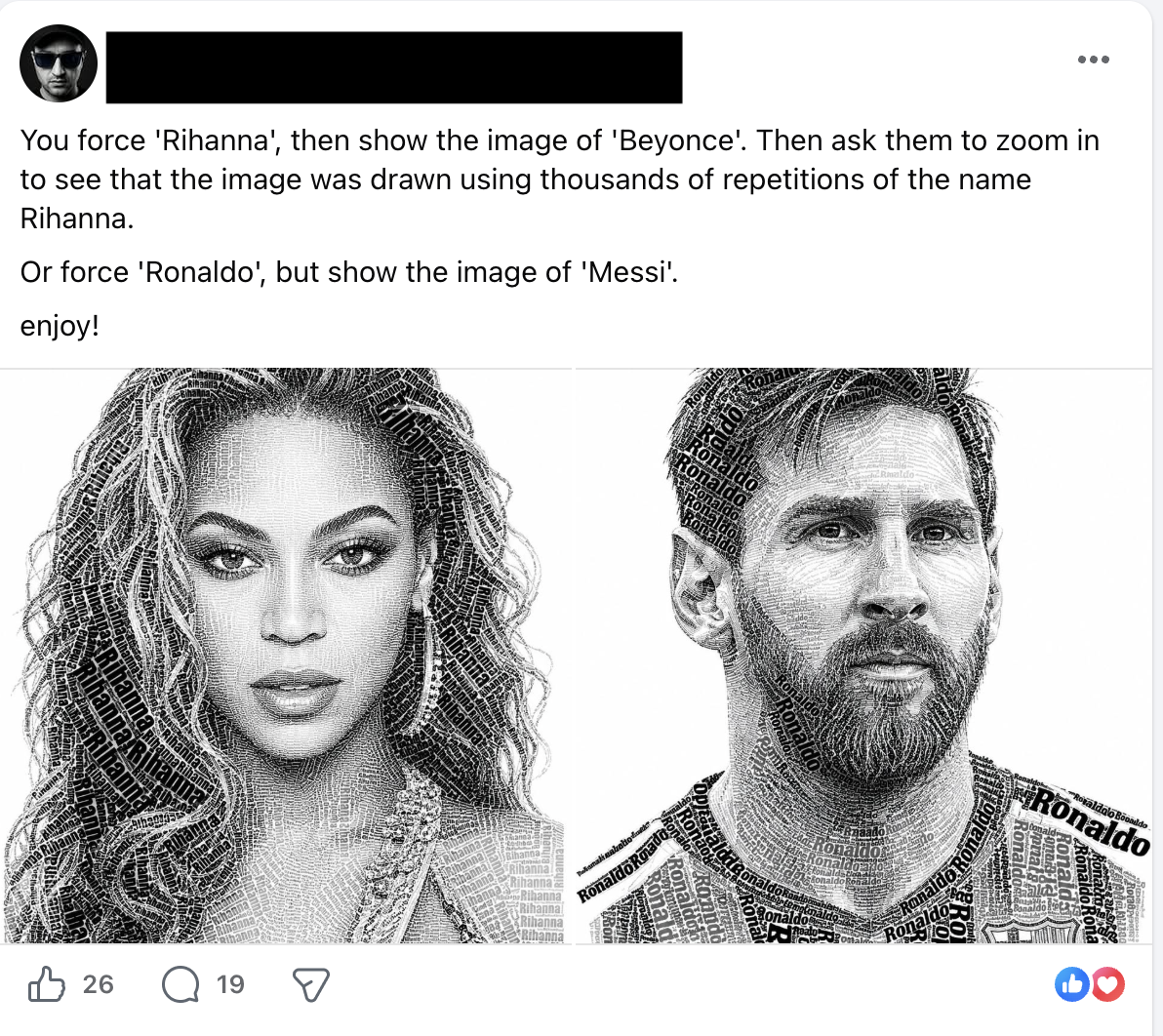
This feels like one of the less impressive ways to hide a word in an image. And given that’s it’s something AI clearly shits out in 2 seconds, it’s not even that interesting.
If anything, I’d probably go the other way with it: show the written name as a failed prediction and then zoom out to reveal the image. In that case it might be better if the image is made up of a bunch of different names so you can scan over to the next name. “Is it Rihanna? Cardi B? Megan Thee Stallion?” And as you zoom out it’s just a cluster of more and more names, as if you were covering all your bases, until finally the image reveals itself.
But either way, this sort of thing never comes off as much more than a gag to people. There’s no real sense that you “screwed up” and then made things right. There’s nothing particularly magical about it.
It’s the phone version of a corny packet trick.